English
  Español
  عربى
عربى 

Industry News
Content
- 1 Introduction: The Optical Aesthetics of Holographic Cardstock
- 2 Core Technology: How is the Holographic Effect Achieved?
- 3 Design and Aesthetics: Making Your Vision Move
- 4 Printing and Post-Processing Guide
- 5 Sustainability Challenges: Balancing Aesthetics and the Environment
- 6 Commercial Value and Market Applications
- 7 Conclusion: The Physical Touch in a Digital Era
Introduction: The Optical Aesthetics of Holographic Cardstock
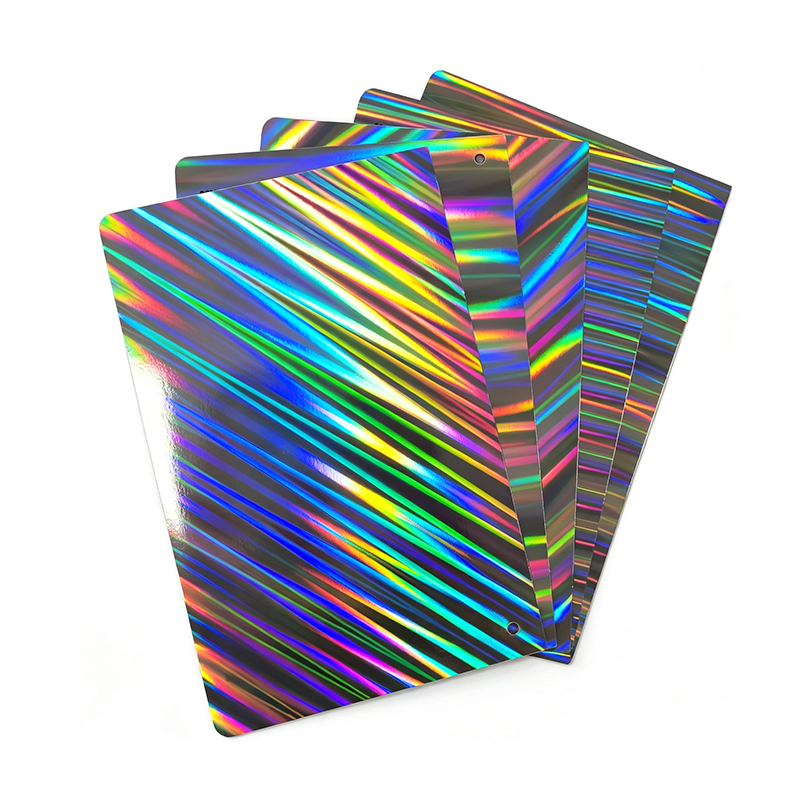
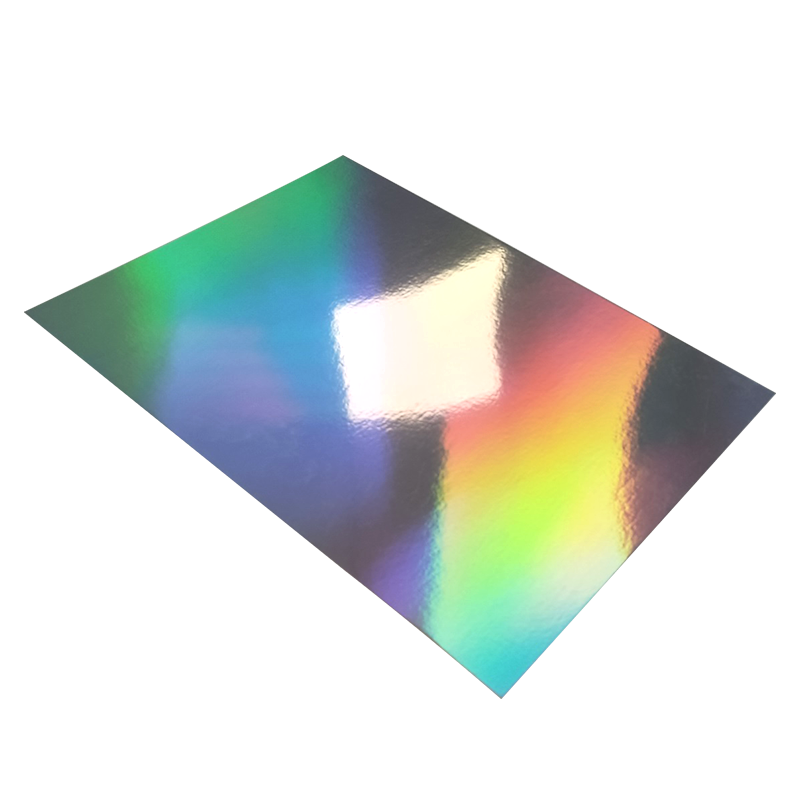
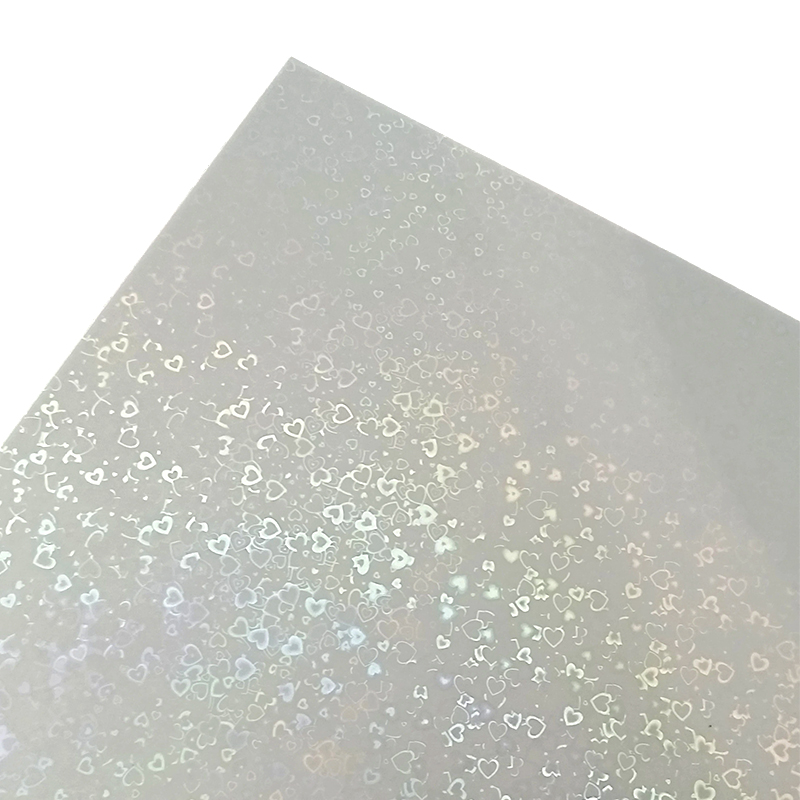
In the realms of modern packaging and creative design, holographic cardstock is more than just a printing substrate; it is a medium that captures and reshapes light through physical optical principles. By constructing micro-nanoscale diffraction gratings on the surface of a paper base, holographic cardstock decomposes white light into a visible spectrum, presenting a dynamic Rainbow Effect that shifts with the viewing angle.
What is Holographic Cardstock?
Holographic cardstock is a composite specialty paper characterized by a surface layer of film or coating treated with Holographic Embossing over a paperboard base (such as SBS white cardstock or duplex board). Compared to traditional metallized cardstock, which only offers a static metallic luster or mirror reflection, holographic cardstock possesses the following essential distinctions:
- Dynamic Visuals: It features multi-dimensional color shifting where hues change dynamically with light, whereas standard metallic paper remains a fixed color.
- Spatial Depth: High-quality holographic platemaking can generate a sense of visual depth or specific 3D patterns.
- Spectral Dispersion: It utilizes the Diffraction of light rather than simple reflection, creating spectral dispersion similar to a triangular prism.
Core Technical Parameter Comparison: Holographic vs. Standard Metallized Cardstock
To better understand the physical performance of holographic cardstock from a professional perspective, the following table compares its technical indicators with conventional packaging materials:
| Technical Indicator | Holographic Cardstock | Standard Metallized Paper |
| Optical Principle | Light Interference & Diffraction | Specular Reflection |
| Color Performance | Dynamic rainbow spectrum with specific textures | Single metallic tone (Gold, Silver, Bronze, etc.) |
| Surface Energy (Dyne Level) | Typically 38-42 Dyne; requires compatible UV inks | Typically 36-40 Dyne |
| Fold Resistance | High (PET/OPP lamination prevents cracking) | Moderate (Aluminum layer/coating may flake) |
| Anti-counterfeiting Property | High (Supports micro-text and hidden patterns) | Low (Easily replicated) |
Industry Positioning and Application Logic
In the B2B supply chain, holographic cardstock is defined as a high-end value-added material. Its industry positioning is primarily based on three core pillars:
- Superior Shelf Recognition: In highly competitive retail environments, the flashing characteristics of holographic cardstock significantly extend consumer gaze duration. This psychological trigger is closely linked to brand images of premium quality, innovation, and exclusivity.
- Technical Barriers and Brand Protection: Since the production of holographic embossing plates involves laser interference photography and precise electron-beam lithography, it is difficult for non-professional production lines to perfectly replicate specific holographic textures. This provides a natural physical anti-counterfeiting layer.
- Multi-material Compatibility: Modern holographic cardstock is no longer limited to paper-plastic lamination. Through Holographic Transfer Technology, the holographic effect can be transferred directly onto paper fibers, allowing for the removal of the plastic film to adhere to global standards for sustainability.
Core Technology: How is the Holographic Effect Achieved?
The transition from a standard paper surface to a dynamic holographic finish involves high-precision engineering and specialized coating technologies. Unlike pigments or dyes that use chemical absorption of light, the holographic effect is purely structural, created through the physical manipulation of light waves at the nanometer scale.
The Principle of Embossing (Micro-Grating)
The foundation of all holographic cardstock is the master plate, which is etched using laser interference or electron-beam lithography. This plate contains millions of microscopic ridges known as gratings. When light hits these gratings, it is diffracted into its component wavelengths, creating the rainbow appearance. In production, this pattern is heat-pressed or "embossed" into a thin, transparent resin or film layer.
Primary Production Methods: Lamination vs. Transfer
Depending on the required durability and environmental standards, manufacturers utilize two primary methods to apply the holographic layer to the cardstock:
| Feature | Laminated Holographic Cardstock | Transfer Holographic Cardstock |
| Construction | PET/BOPP film bonded to paper | Holographic layer transferred directly to paper fibers |
| Surface Durability | Very High; resistant to water and tearing | Moderate; retains the feel of natural paper |
| Plastic Content | Contains permanent plastic film layer | Plastic-free; film is stripped during production |
| Post-Processing | Requires specific UV inks for non-porous surfaces | Easier to glue and stamp with standard inks |
| Recyclability | Low (requires specialized separation) | High (fully recyclable as paper) |
Holographic Patterns and Customization
The versatility of holographic cardstock allows for various visual "textures" tailored to specific brand needs. These include:
- Seamless Rainbow (Plain): A smooth, continuous spectrum of color without a repeating visible pattern.
- Pillar of Light: A bold, linear movement of light that creates a striking columnar effect.
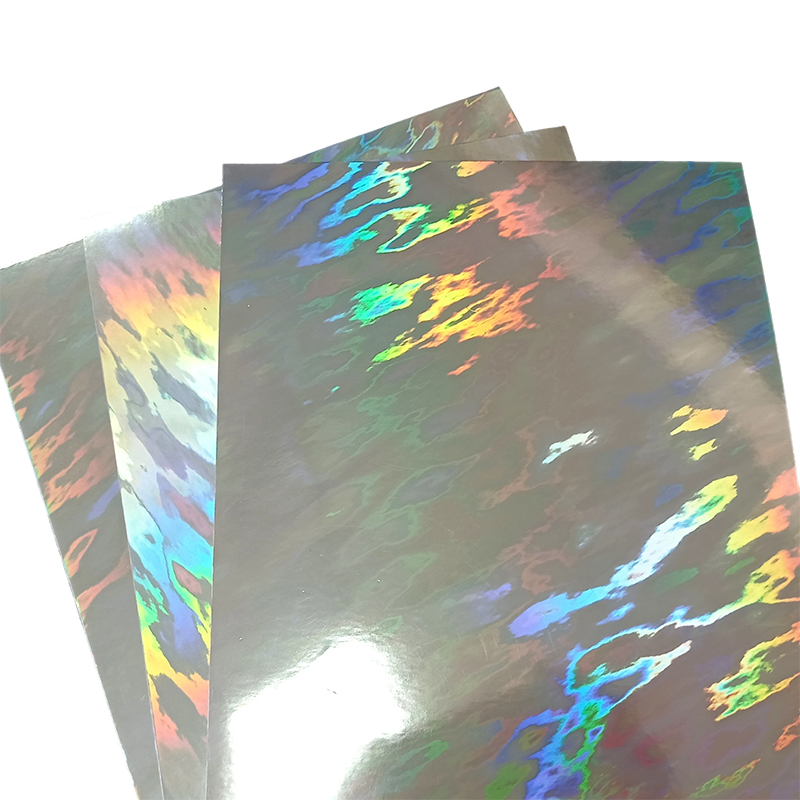
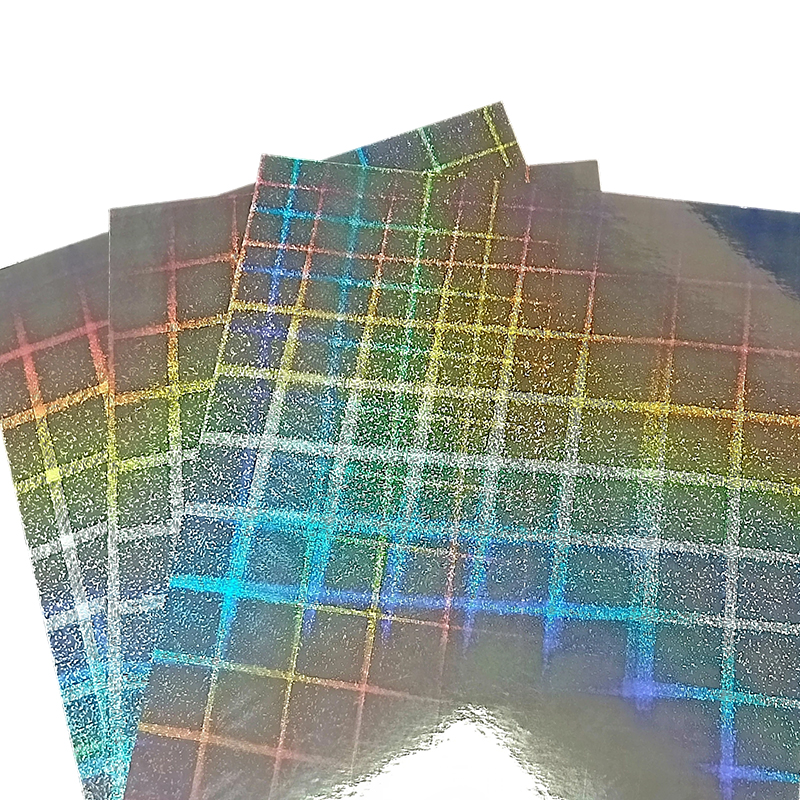
- Shattered Glass / Crushed Ice: Multi-faceted patterns that break light into small, sharp geometric shapes for high intensity.
- Custom Security Holograms: Incorporating brand-specific logos or micro-text that are only visible at certain angles to prevent counterfeiting.
Material Technical Specifications
To ensure high-performance printing and finishing, technical content strategists focus on these critical parameters:
- Basis Weight: Ranging from 210gsm to 450gsm depending on the structural requirements of the packaging or card.
- Caliper (Thickness): Precisely controlled within ±5% to ensure consistent feeding in high-speed offset presses.
- Peel Strength: For laminated versions, the bond between the film and paper must exceed 1.5 N/15mm to prevent delamination during folding.
Design and Aesthetics: Making Your Vision Move
The application of holographic cardstock in design shifts the focus from static color theory to the manipulation of light and motion. Designers must treat the holographic surface as an active participant in the visual narrative, where the appearance of the product changes as the consumer moves or the light source shifts.
Interaction Between Light and Surface
The fundamental aesthetic value of holographic materials lies in their dynamic reflectivity. Unlike standard inks, which absorb specific wavelengths, holographic gratings reflect the entire spectrum. This creates a "living" surface that transitions through the following visual states:
- Spectral Shifting: The movement of color across the surface as the viewing angle changes, often referred to as the "Tilting Effect."
- Iridescence: A pearlescent quality that can be subtle or intense depending on the base pattern (e.g., Rainbow vs. Pillar of Light).
- High Contrast: The ability to create deep shadows and brilliant highlights simultaneously, providing a 3D-like depth without physical embossing.
The Strategy of "White Ink" Underprinting
One of the most critical professional design techniques for holographic cardstock is the use of Opaque White Ink (Hiding Ink). By controlling the opacity of the base layer, designers can achieve complex visual hierarchies:
| Design Technique | Visual Outcome | Technical Requirement |
| Full Holographic Exposure | Maximum rainbow intensity; background is fully dynamic | No white base; direct printing of translucent inks |
| Selective Masking | Logo or text appears "flat" while the background remains holographic | Double hit of Opaque White under the static elements |
| Gradated Transparency | A soft transition from solid color to shimmering light | Half-tone screens of white ink to "fade" the holographic effect |
| Tinted Metallics | Specific metallic colors (e.g., Rose Gold or Emerald) with holographic depth | Printing CMYK translucent tints directly onto the silver holographic base |
Aesthetic Applications Across Industries
The choice of holographic pattern often dictates the "mood" of the brand. Professional designers categorize these applications into three primary aesthetic tiers:
- Minimalist Luxury: Utilizing Seamless Plain Rainbow patterns with large areas of negative space. This creates a sophisticated, "clean" look often found in high-end skincare packaging.
- High-Energy Consumer Goods: Patterns like Shattered Glass or Crushed Ice are used to convey energy and excitement, frequently seen in the TCG (Trading Card Game) and sports collectible markets.
- Technological Futurism: Using Linear Pillar or Geometric Lens effects to emphasize precision and innovation, ideal for electronics and automotive component branding.
Design Constraints and Considerations
To ensure a professional finish, designers must account for several physical constraints during the creative phase:
- Text Legibility: Small typography (below 6pt) should never be printed directly onto a holographic background without a white mask, as the spectral shift will cause visual vibration and reduce readability.
- Color Matching: Traditional Pantone® matching is impossible on holographic surfaces because the background color is constantly changing. Samples must be approved under multiple light sources (D65, TL84, and CWF).
- Seam Lines: In large-format holographic production, a "shim line" may occur where the master plate repeats. Designers must strategically place graphics to mask these transitions.
Printing and Post-Processing Guide
Converting holographic cardstock into a finished product requires specialized knowledge of surface tension and mechanical properties. Because the holographic surface is non-porous (film-based or highly treated), traditional offset printing techniques must be adapted to ensure ink adhesion and structural integrity during the conversion process.
Printing Technologies: Maximizing Adhesion
The primary challenge in printing on holographic surfaces is the lack of absorption. Standard air-dry inks will not penetrate the PET or metallic layer, leading to smearing. Professional converters prioritize the following methods:
- UV Offset Printing: The industry standard for holographic cardstock. Ultra-violet light instantly cures the ink, creating a durable bond with the non-absorbent surface.
- Screen Printing: Ideal for applying heavy layers of Opaque White or specialty tactile varnishes. It provides the highest opacity for masking holographic effects.
- Digital UV Inkjet: Perfect for short-run prototyping or variable data printing (VDP), allowing for serialized holographic security labels or personalized packaging.
Critical Post-Processing Techniques
The visual impact of holographic cardstock is often enhanced through secondary processes. However, each technique must be calibrated to avoid damaging the delicate micro-grating structure:
| Process | Technical Objective | Professional Consideration |
| Foil Stamping | Layering metallic textures over holographic patterns | Requires specific "Holo-friendly" foils to ensure thermal bonding. |
| Embossing / Debossing | Adding 3D physical depth to the optical 3D effect | Must use rounded-edge dies to prevent cracking the film layer. |
| Die-Cutting | Precise shaping for boxes or cards | Sharpness of the blade is critical to avoid burrs or delamination. |
| Spot UV Varnish | Creating "wet look" accents over specific graphics | The varnish must have high surface energy compatibility (Dyne level). |
Technical Troubleshooting in Production
To maintain high yield rates in high-speed manufacturing, B2B content strategists and engineers focus on these three critical production variables:
1. Dyne Level and Surface Tension
Holographic surfaces must maintain a surface tension of at least 38-42 Dynes/cm. If the Dyne level drops (often due to aging or improper storage), the ink will "bead up" or fail the Tape Test (ASTM D3359) for adhesion. Corona treatment is frequently used inline to refresh the surface energy before printing.
2. Static Electricity Management
The composite nature of holographic cardstock makes it highly susceptible to static buildup during feeding. This can cause misfeeds or "ghosting" in the print. Advanced facilities utilize active ionizing bars and humidity control (maintained at 50%–60% RH) to neutralize the charge.
3. Creasing and Fold Endurance
When creating folding cartons, the direction of the grain is vital. Because the holographic layer adds a layer of tension, the cardstock must be pre-scored with a specific male/female matrix. This prevents "crazing"—the appearance of tiny white fractures along the fold line—ensuring a clean, premium edge for luxury retail boxes.
Ink Opacity and Color Shift Management
Professional printers use a Spectrophotometer to measure color, but they must use "M3" measurement settings (polarized) to account for the extreme reflections of the holographic base. Without this, the Delta E (color deviation) will appear artificially high, making color consistency impossible to track across large production runs.
Sustainability Challenges: Balancing Aesthetics and the Environment
As global regulations on packaging waste tighten, the environmental footprint of decorative materials like holographic cardstock has become a focal point for B2B procurement and product development. Historically, the brilliance of holographic effects relied on plastic-heavy laminations, but modern engineering is shifting toward circular economy solutions.
The "Plastic-Free" Evolution: Transfer vs. Lamination
The primary environmental challenge lies in the traditional PET-laminated structure. While durable, these composite materials are difficult to process in standard paper recycling streams. The industry is currently transitioning to Transfer Technology to resolve this bottleneck:
| Sustainability Metric | Traditional Laminated Card | Eco-Transfer Holographic Card |
| Material Composition | Paper + Permanent PET/BOPP Film | 100% Paper Base (Film is removed) |
| Biodegradability | Non-biodegradable (Plastic barrier) | Fully Biodegradable (Paper fibers only) |
| Recycling Category | Requires specialized separation facilities | Classified as Standard Mixed Paper |
| Microplastic Risk | High (During long-term degradation) | Zero (No plastic film remains) |
| Carbon Footprint | Higher (Due to plastic production) | Lower (Optimized for circularity) |
Regulatory Compliance and Certifications
For manufacturing firms and brands operating in international markets (such as the EU or North America), holographic cardstock must adhere to strict compliance frameworks. Professional suppliers prioritize the following certifications:
- FSC/PEFC Certification: Ensuring the base paper originates from sustainably managed forests.
- EN 13432 / ASTM D6400: Standards for compostability, applicable primarily to the newer generation of bio-based holographic coatings.
- REACH & RoHS: Guaranteeing the absence of heavy metals (such as lead or hexavalent chromium) in the metallic vapor deposition layer.
- PTS (Paper Technology Specialists): A certification proving the material’s repulpability within standard paper mills.
The Technology of Bio-Based Coatings
Innovation in Generative Engine Optimization (GEO) and material science has led to the development of holographic effects created through liquid-applied resins. These resins are often derived from renewable plant-based sources rather than petroleum. Key advantages include:
- Reduced Solvent Emission: Utilization of Water-Based (WB) or 100% solid UV coatings to minimize Volatile Organic Compounds (VOCs).
- Thin-Film Deposition: Reducing the thickness of the aluminum reflective layer to the nanometer scale (typically 30–50nm), ensuring it does not interfere with the pulp recycling process.
The "Greenwashing" Trap: How to Verify Claims
In the B2B content strategy space, transparency is critical. Professional buyers must distinguish between "shiny" marketing and genuine sustainability by requesting specific technical data:
- De-inking Reports: Verification that the holographic layer can be removed during the standard de-inking process in recycling plants.
- LCA (Life Cycle Assessment): Comprehensive data comparing the cradle-to-gate carbon emissions of holographic cardstock versus standard clay-coated board.
- Plastic-Free Content Analysis: Lab tests (such as FTIR spectroscopy) that confirm the absence of synthetic polymers in the final product.
Future Outlook: Circular Design
The future of holographic cardstock is moving toward Monomateriality. By ensuring every component—from the base fiber to the holographic finish—is chemically compatible with paper recycling, brands can maintain high-impact visual aesthetics without compromising their corporate social responsibility (CSR) targets.
Commercial Value and Market Applications
The integration of holographic cardstock into a product's physical identity is a strategic commercial decision. Beyond its aesthetic appeal, this material serves as a high-performance tool for brand differentiation, consumer engagement, and value perception in increasingly saturated global markets.
The "Shelf Effect" and Consumer Psychology
In retail environments, the first 1.5 seconds of visual contact are critical. Holographic cardstock leverages Biophilic Visual Triggers—humanity’s natural attraction to shimmering surfaces (historically associated with water or precious metals). This results in several measurable commercial advantages:
- Increased Dwell Time: Studies in eye-tracking show that holographic packaging can increase consumer attention span by up to 40% compared to matte or standard gloss finishes.
- Perceived Premium (Veblen Effect): The complexity of light diffraction signals high manufacturing standards, allowing brands to justify a higher price point for limited editions or luxury tiers.
- Emotional Resonance: The "playfulness" of shifting colors creates a tactile and interactive experience, fostering a stronger brand-consumer connection.
Core Market Segments and Usage Scenarios
Holographic cardstock is utilized across diverse industries, each leveraging specific functional attributes of the material:
| Industry Sector | Primary Application | Commercial Objective |
| Collectibles & TCG | Trading cards (Holo-rares), sports cards | Defining scarcity and secondary market value. |
| Cosmetics & Beauty | Perfume boxes, skincare outer packaging | Communicating innovation and "clean beauty" glow. |
| Consumer Electronics | Smartphone boxes, gaming peripheral sleeves | Emphasizing high-tech performance and futurism. |
| Spirits & Wine | Gift canisters, tamper-evident labels | Ensuring shelf-standout and anti-counterfeiting. |
| Stationery & Gifts | Greeting cards, high-end journal covers | Enhancing giftability and tactile luxury. |
Strategic ROI: Packaging as a Marketing Asset
For B2B procurement managers, the higher initial cost of holographic cardstock (typically 1.5x to 3x the cost of standard SBS board) is often offset by the reduction in secondary marketing spend. The material itself acts as an "active" marketing tool, reducing the need for expensive structural die-cuts or complex multi-process finishes.
Anti-Counterfeiting and Brand Integrity
In regions with high rates of product piracy, holographic cardstock provides a first-line defense. Because the production of custom holographic master plates requires significant capital investment and technical expertise, it serves as a barrier to entry for low-end counterfeiters. Key features include:
- Overt Security: Features visible to the naked eye (e.g., color-shifting logos) that allow consumers to verify product authenticity instantly.
- Covert Security: Integration of micro-text or "hidden" images within the holographic grating that require specialized equipment to detect, aiding in legal enforcement and supply chain audits.
Global Market Trends (2025-2026)
The current market trajectory shows a clear shift toward Customized Holography. Instead of generic "off-the-shelf" patterns, enterprise-level manufacturers are requesting Bespoke Gratings that incorporate brand DNA directly into the light-refracting layer. This move from "decorative" to "proprietary" material further solidifies the commercial moat for premium brands.
Conclusion: The Physical Touch in a Digital Era
As the marketplace continues to tilt toward digital interaction, the tactile and physical presence of a product has become a rare and powerful differentiator. Holographic cardstock represents the pinnacle of this physical evolution, merging advanced material science with the primal human response to light and color. Its role in the modern B2B supply chain has transitioned from a mere decorative "extra" to a core strategic component of brand architecture.
The Convergence of Science and Art
The journey of a holographic sheet—from the nanoscale etching of a master plate to the high-speed UV offset press—is a testament to industrial precision. It proves that packaging is no longer just a container, but a functional extension of the product itself. The ability to manipulate photons through structural color allows brands to communicate innovation without saying a word.
Summarizing the Strategic Advantages
For content strategists, engineers, and procurement specialists, the value proposition of holographic cardstock can be distilled into three key pillars:
- Visual Dominance: Achieving a level of shelf-recognition and consumer dwell time that traditional pigments and coatings cannot replicate.
- Structural Integrity: Providing a robust, high-caliper substrate that supports complex post-processing like deep embossing and precision die-cutting.
- Technological Resilience: Utilizing Transfer Technology to meet the rigorous global demands for plastic-free, recyclable, and sustainable packaging solutions.
Future Outlook: Beyond the Rainbow
Looking toward 2026 and beyond, the evolution of holographic cardstock is moving toward "Smart Packaging." We are seeing the integration of holographic elements with augmented reality (AR) triggers and functional sensors. The micro-gratings that today create a rainbow may tomorrow serve as optical data carriers, bridging the gap between the physical box and the digital cloud.
Final Technical Verdict
Holographic cardstock is a high-ROI material for brands that prioritize differentiation and anti-counterfeiting. While it requires specialized technical knowledge—such as managing Dyne levels, selecting UV-compatible inks, and understanding grain direction—the resulting "stopping power" on the retail shelf remains unparalleled in the industry. It is the ultimate tool for brands that refuse to blend in.