English
  Español
  عربى
عربى
Home / News / Industry News / Gold Foil-Backed Cardboard: Pure Foil Lamination for Moisture and Barrier Protection
Industry News


Content
In premium packaging, the first impression is often metallic. Gold foil-backed cardboard delivers that impression while quietly performing a much more critical function: protecting the product inside from moisture, oxygen, and other environmental threats. The key is pure foil lamination, a process that bonds a continuous layer of metallic foil to a paperboard core. This article explores how that construction works, why it outperforms coated or printed barriers, and what it means for industries that demand both luxury aesthetics and reliable protection.
Gold foil-backed cardboard is a composite packaging material made by laminating a thin aluminum foil — typically 6 to 12 microns thick — onto a paperboard base. The foil receives a gold-colored coating or tinted finish to achieve its distinctive metallic look. The result is a board that offers the structural stiffness of paperboard with the impermeability of a continuous metal layer.
Unlike metallic-printed or metallized film-coated boards, which use pigment or a thin vacuum-deposited metal layer, foil-backed cardboard uses a freestanding foil that is bonded to the substrate. This pure foil layer has no pinholes or micro-cracks; it forms a true physical barrier that blocks water vapor, gases, and light from reaching the enclosed product.
The visual distinction between gold foil-backed cardboard and metallized board is noticeable under magnification: the foil layer is uniform and opaque, while metallized coatings can show pinholes. This uniformity is the reason designers trust it for long-term packaging.
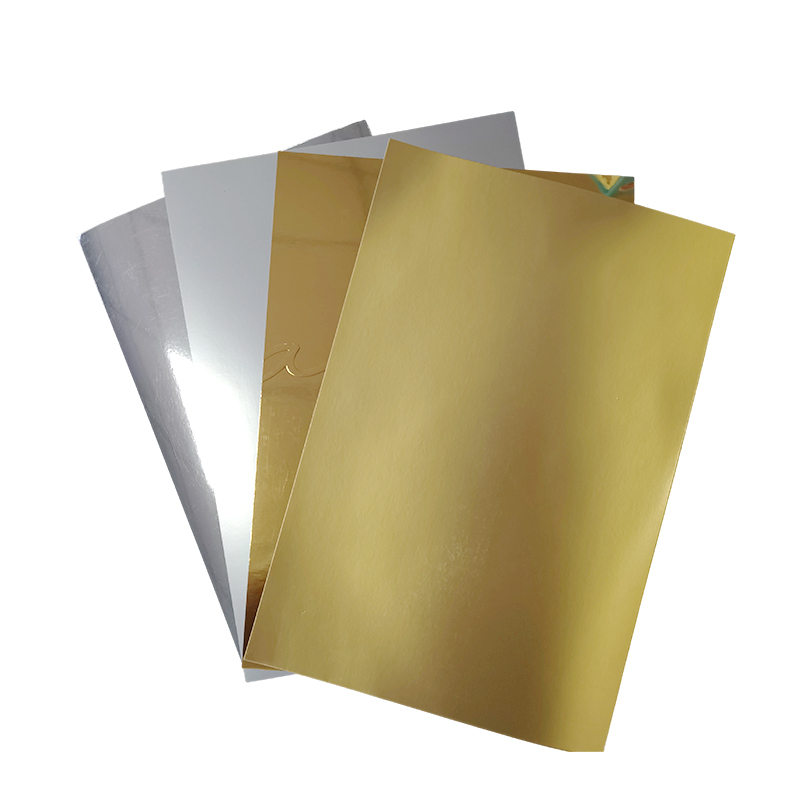 Gold Foil-Backed Cardboard for Premium PackagingThis foil-laminated cardstock offers a uniform metallic finish with effective light, oxygen, and moisture barriers. Its rigidity suits die-cutting and embossing, making it ideal for luxury gift boxes and high-end product packaging.View Product →
Moisture is one of the most destructive forces in packaging. Humidity can cause paperboard to lose strength, trigger mold growth, and compromise the integrity of dry foods, cosmetics, pharmaceuticals, and electronic components. Even products that appear sealed can degrade over time if the packaging material permits moisture vapor to pass through.
The standard measure of this behavior is the Moisture Vapor Transmission Rate (MVTR). A low MVTR means less water vapor crosses the material in a given time. The table below compares typical values for common packaging materials:
| Material | Typical MVTR (g/m²·day) |
|---|---|
| Plain paperboard | > 100 |
| Polyethylene-coated board | 1 – 10 |
| Gold foil-backed cardboard | < 0.1 |
Because the foil layer is continuous and non-porous, gold foil-backed cardboard provides a barrier that is orders of magnitude tighter than coated or printed alternatives. For high-value goods that must survive long supply chains or challenging storage conditions, this level of protection is not optional — it is essential.
For industries such as cosmetics and pharmaceuticals, moisture can trigger chemical degradation, separation of emulsions, and loss of potency. A barrier that performs at less than 0.1 g/m²·day ensures that products remain stable through warehousing, shipping, and retail display.
The performance of gold foil-backed cardboard depends entirely on the quality of the lamination process. A typical production line starts with a clean paperboard substrate. Adhesive is applied uniformly to its surface, then a roll of pure aluminum foil is pressed onto the adhesive under controlled heat and pressure. The composite is then cured, allowing the adhesive to reach its full bonding strength.
What separates pure foil lamination from simple foil stamping or metallized film coating is the absence of an intermediate plastic carrier. The foil itself becomes the functional barrier layer. When manufactured on high-speed lamination lines with precise tension control, the foil remains flat and free of wrinkles, creases, and pinholes. This integrity is what keeps moisture out and preserves the freshness of the packaged product.
Quality control plays a critical role. On a high-speed lamination line, even a small particle of dust can create a void in the adhesive, leaving a microscopic tunnel for moisture. That is why reputable suppliers use clean workshops and inline defect detection systems to identify pinholes, bubbles, or wrinkling before they reach customers.
These benefits are not theoretical. In accelerated aging tests, foil-laminated boards consistently show lower moisture gain than coated boards, and packaged products retain their sensory qualities for longer periods.
Gold foil-backed cardboard is widely used in cosmetics packaging, wine and spirits boxes, premium tea containers, pharmaceutical cartons, and luxury gift packaging. In these sectors, the material must deliver both shelf presence and long-term protection against humidity and contamination.
For example, a premium cosmetic cream stored in a foil-backed carton is less likely to lose its fragrance or moisture content. A wine box with a foil barrier helps protect the bottle from temperature swings and external odors. In pharmaceutical packaging, the barrier qualities help maintain efficacy by reducing the transmission of water vapor and oxygen.
In the tea and tobacco industries, where aroma preservation is vital, the foil barrier prevents the escape of volatile compounds and blocks humidity from damaging delicate leaves. For premium spirits, a foil-backed carton also provides structural rigidity that enhances the unboxing experience.
For designs that require a silver metallic finish with the same barrier performance, silver foil-backed cardboard offers an equally reliable alternative.
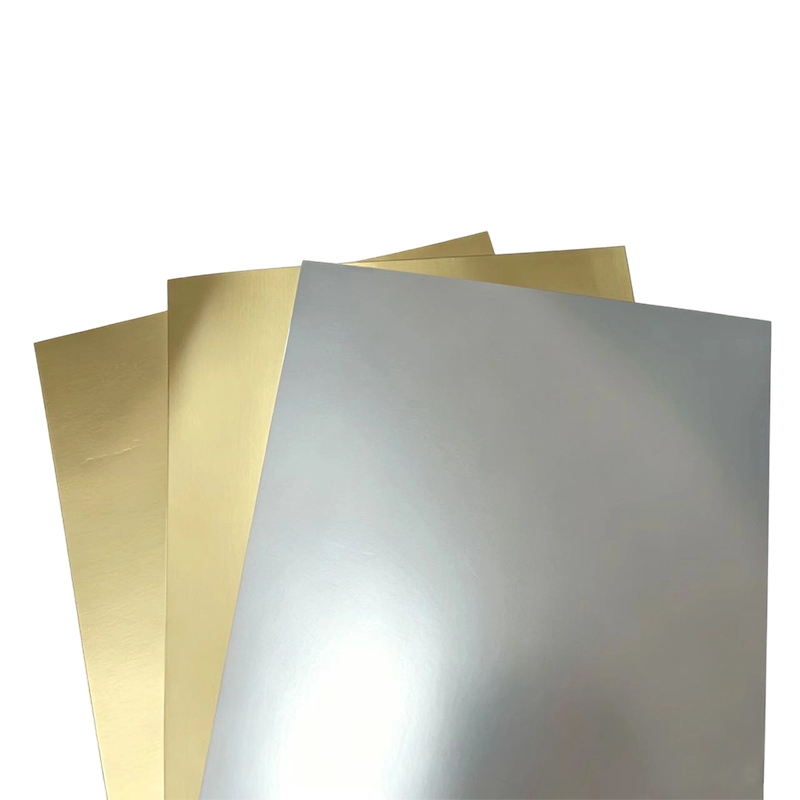 Silver Foil-Backed Cardboard for Barrier PackagingA bright silver metallic cardstock with strong moisture and oxygen resistance, laminated for durability and flatness. It supports printing, embossing, and die-cutting, enhancing shelf appeal for premium goods requiring reliable sealing.View Product →
Selecting the ideal gold foil-backed cardboard requires attention to several variables:
A reliable supplier will work with you to balance cost and performance. For instance, a lighter base board with a 6-micron foil may be sufficient for short-life consumer packaging, while a heavier board with an 8–12 micron foil is preferable for long-term storage and export shipments.
At our production facilities in Shanghai and Taicang, these specifications are adjusted to meet the exact needs of each application, from small cosmetic cartons to large display boxes.
Aluminum foil is highly recyclable when separated from the paperboard. However, the combination of foil and board in a single laminate can complicate standard paper recycling. Still, the use of foil-backed cardboard often reduces overall packaging weight compared to plastic-heavy alternatives, and the barrier performance can extend shelf life, which reduces food waste and product loss.
Many manufacturers are now developing thinner foils and water-based adhesives to improve recyclability. The goal is to retain the barrier properties while making the laminate easier to process in existing recycling streams. Lifecycle assessments show that the energy used to produce aluminum foil is offset by the reduction in product waste and the use of thinner foils than in past decades.
Gold foil-backed cardboard contains a bonded aluminum foil layer that provides a true barrier against moisture and gases. Metallic cardstock is often made with a metallized film or metallic pigment coating, which offers a metallic appearance but significantly less barrier performance.
Yes. The foil surface can be treated and overprinted using UV offset, screen printing, and gravure processes. Inks and varnishes adhere well after appropriate surface treatment, allowing for rich decoration.
It can be used in food contact applications when the adhesive and coatings comply with relevant food safety regulations. It is important to specify your requirements to the manufacturer so that compliant materials are selected.
It should be kept in a dry, cool environment, protected from direct sunlight. The board should be stored flat or on edge, with appropriate humidity control to prevent the paperboard from swelling or the foil from oxidizing.
Gold foil-backed cardboard is more than a decorative packaging trend. Its combination of aesthetic brilliance and pure foil lamination delivers measurable improvements in moisture protection, barrier strength, and product longevity. For brands and converters looking to elevate their packaging performance without compromising on appearance, understanding how the foil layer works is the first step toward making the right material choice.