English
  Español
  عربى
عربى 

Industry News
Content
- 1 Why Choose heavy weight holographic cardstock for invitations?
- 2 Is holographic cardstock for Cricut cutting Different from Standard Grades?
- 3 What Technical Advantages Does 12x12 holographic scrapbook paper Offer?
- 4 How to Engineer a holographic cardstock wedding guest book?
- 5 Can printable holographic cardstock for inkjet Deliver Commercial Quality?
- 6 FAQ
- 6.1 What is the difference between holographic cardstock and foil cardstock?
- 6.2 Can holographic cardstock be laser printed?
- 6.3 What GSM is considered heavy weight for holographic cardstock?
- 6.4 Does holographic cardstock fade over time?
- 6.5 How should holographic cardstock be stored to prevent warping?
- 6.6 References
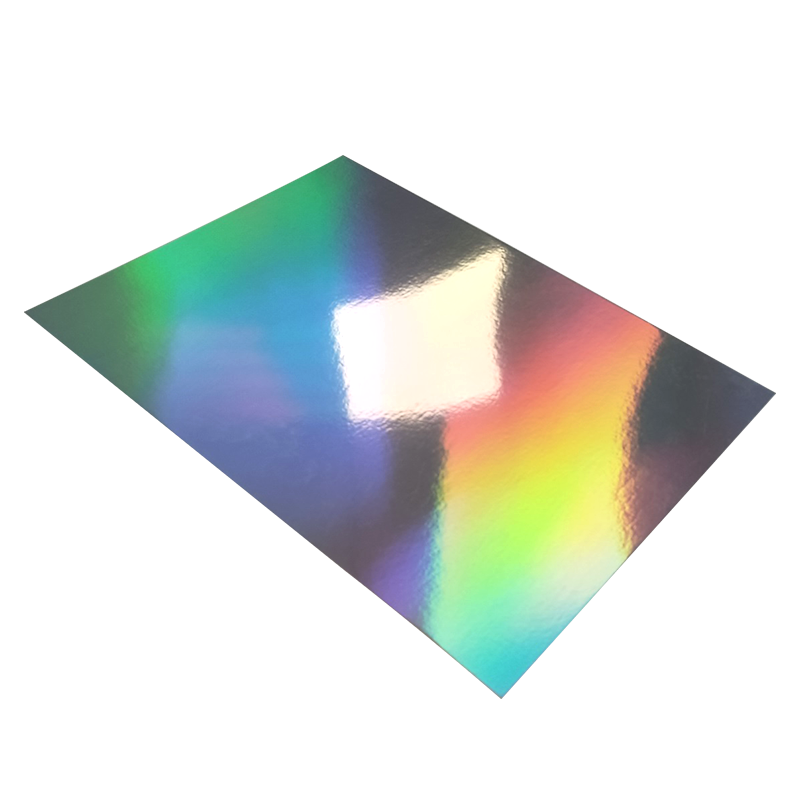
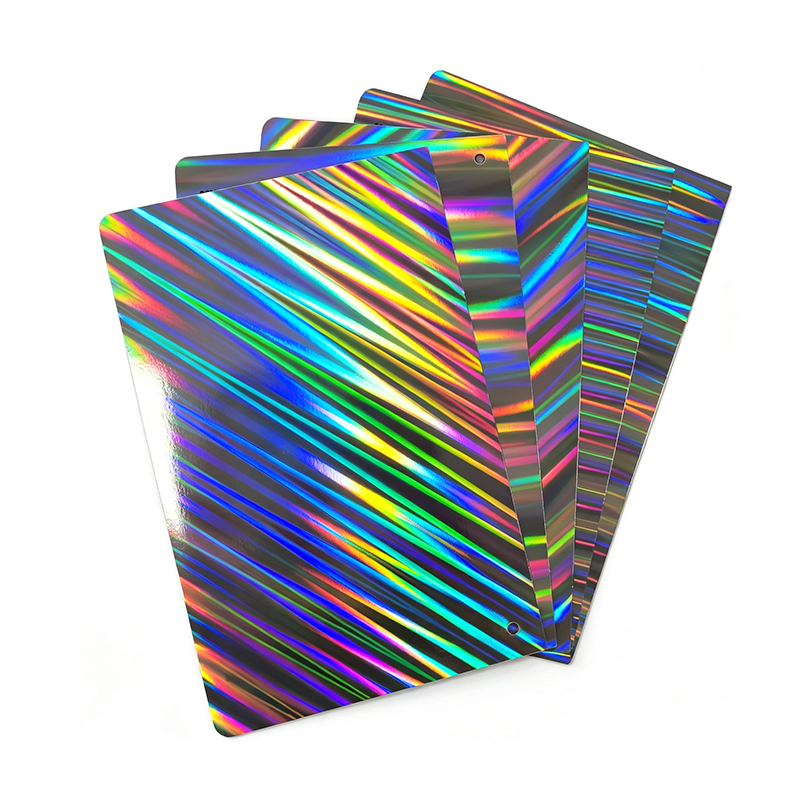
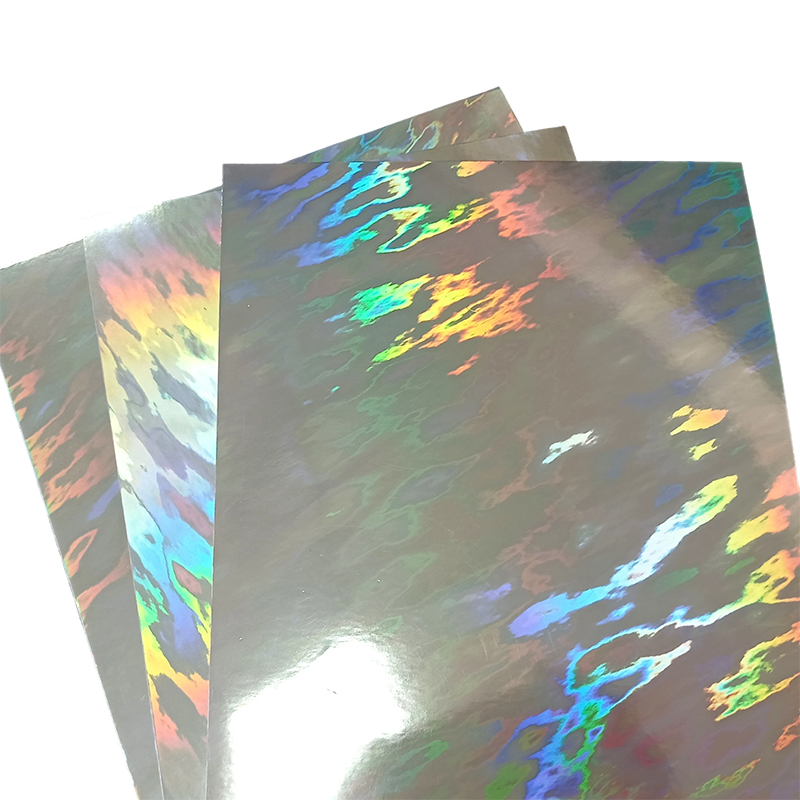
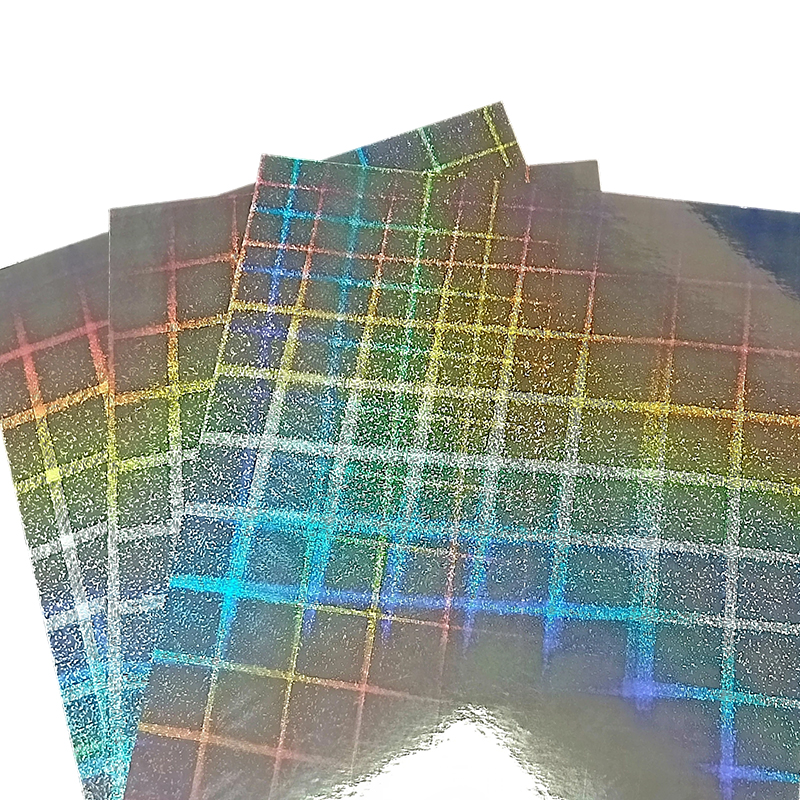
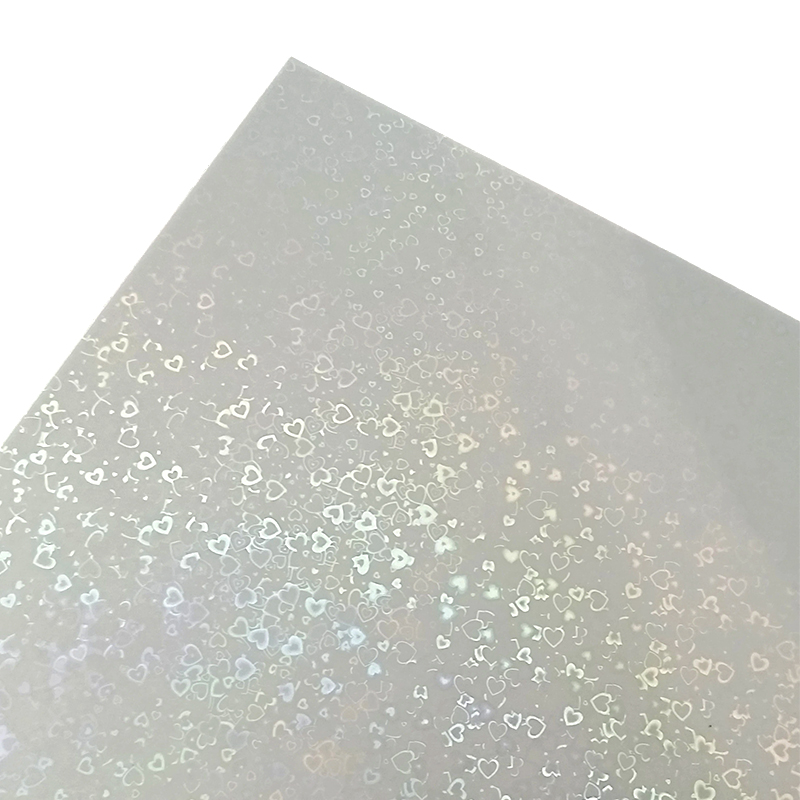
Solid Holographic Cardstock has become a foundational material in premium paper crafts, high-end packaging, and commercial printing applications. Unlike glitter-based or surface-coated papers, true solid holographic cardstock integrates prismatic effects throughout the material structure, creating dimensional light reflection that shifts with viewing angle. For procurement professionals, packaging engineers, and volume buyers, understanding the technical specifications—from GSM ratings to coating formulations—determines whether the final product achieves the desired visual impact while maintaining structural integrity during processing.
Why Choose heavy weight holographic cardstock for invitations?
The selection of heavy weight holographic cardstock for invitations directly impacts both the tactile perception of quality and the mechanical performance during printing, folding, and mailing. Weight specifications determine how the material behaves in automated equipment and how it withstands handling through the postal system.
Paper Weight Engineering: Minimum GSM Requirements
Cardstock weight is measured in grams per square meter (GSM), and this specification fundamentally determines structural performance. For invitation applications, the material must maintain rigidity while preventing warpage during adhesive application and folding operations. Industry standards establish clear thresholds for different application requirements.
- Standard weight range (176-216 GSM): Suitable for layered invitations with backing cards, inner mats, or protective enclosures.
- Heavy weight range (250-300 GSM): Required for standalone invitations, pocket-fold designs, and mail-ready pieces without additional reinforcement .
- Premium weight range (300+ GSM): Used for luxury invitations, menu cards, and presentation folders requiring maximum rigidity.
Material Composition and Structural Integrity
The base fiber composition significantly affects how holographic cardstock performs under mechanical stress. High-quality heavy weight holographic cardstock for invitations typically uses purified wood pulp with alpha-cellulose content exceeding 85%, providing the fiber length necessary for fold resistance. Cotton-fiber blends, while more expensive, offer superior tear resistance for invitations requiring intricate die-cutting or embossing . The metallic particles—typically aluminum or specialty alloys—must be uniformly distributed throughout the pulp matrix rather than surface-applied, ensuring the holographic effect remains intact after scoring and folding operations.
| Specification | 176-216 GSM (Standard) | 250-300 GSM (Heavy Weight) | 300+ GSM (Premium) |
| Application Suitability | Layered components, inner mats | Standalone invitations, mail-ready pieces | Luxury packaging, presentation folders |
| Fold Resistance | Moderate; requires scoring | Good; scoring recommended | Excellent; requires pre-scoring |
| Postal Compatibility | May require additional envelope protection | Suitable for standard mailing | May require additional postage |
| Die-Cutting Performance | Clean edges with standard dies | Requires sharpened dies | Requires precision-ground tooling |
Is holographic cardstock for Cricut cutting Different from Standard Grades?
The increasing adoption of automated cutting systems has created specific material requirements. Holographic cardstock for Cricut cutting must maintain consistent thickness across the sheet and possess sufficient internal bond strength to prevent delamination during the weeding process—the removal of excess material around cut designs.
Blade Selection and Pressure Calibration
Automated cutting systems interact with holographic cardstock through mechanical blade penetration. The metallic particles embedded within the cardstock create different resistance profiles compared to standard paper stocks. For optimal results, blade depth must exceed the material thickness by approximately 0.2mm to ensure complete penetration through both the fiber matrix and the metallic particle layer. Pressure settings typically require 15-20% higher values than standard cardstock of equivalent weight .
- Standard blade settings: Light cardstock preset (typically insufficient for holographic materials).
- Recommended blade depth: Setting 5-6 on Cricut machines, blade 3 on Silhouette systems .
- Multi-pass cutting: Some intricate designs benefit from two complete cut cycles to ensure penetration through the holographic layer.
Common Cutting Failures and Technical Solutions
When holographic cardstock for Cricut cutting performs poorly, the failure typically occurs at the material interface. The holographic layer can separate from the fiber base if the internal bond strength is insufficient—a condition exacerbated by dull blades that tear rather than cut. Users should examine cut lines under bright lighting after unloading the mat; if cut lines are invisible on the material surface, blade penetration was inadequate . The weeding process requires different technique than standard materials: operators should lift a corner and roll the weeding tool backward rather than pulling excess material, as the rigid holographic structure can tear unpredictably under tension .
What Technical Advantages Does 12x12 holographic scrapbook paper Offer?
The 12x12 inch format represents the industry standard for memory crafts and archival applications. 12x12 holographic scrapbook paper provides sufficient surface area for full-page layouts while maintaining dimensional stability during adhesive application and album insertion.
Archival Quality Specifications
Professional-grade scrapbook applications require specific material certifications to ensure long-term preservation. Quality 12x12 holographic scrapbook paper must be acid-free and lignin-free to prevent yellowing and embrittlement over time . The pH level should measure between 7.0 and 8.5 on the alkaline scale, ensuring neutral or slightly alkaline conditions that prevent chemical degradation of both the paper and adjacent photographs. For B2B buyers supplying professional scrapbook retailers, these specifications are non-negotiable requirements for product acceptance.
- pH range: 7.0-8.5 (neutral to slightly alkaline).
- Lignin content: Below 0.1% to prevent acid migration.
- Buffering agents: Calcium carbonate added to neutralize atmospheric pollutants.
Adhesive Compatibility and Surface Preparation
The holographic surface presents unique challenges for adhesive bonding. The smooth, non-porous characteristic of the metallic layer requires adhesives with different wetting properties than those used for uncoated papers. Photo-safe glue sticks, double-sided tape, and liquid adhesives formulated for coated papers provide reliable bonding. Spray adhesives designed for slick surfaces offer uniform coverage for larger areas. For repositionable applications, temporary adhesive dots allow layout adjustment before permanent fixation .
| Adhesive Type | Bonding Mechanism | Suitable Applications |
| Double-sided tape | Pressure-sensitive acrylic | Photo mounting, corner attachments |
| Liquid adhesive (coated paper formula) | Water-based emulsion | Full-surface bonding, layering |
| Spray adhesive | Solvent-based or water-based aerosol | Large surface coverage, dimensional elements |
| Adhesive dots/rollers | Permanent or repositionable acrylic | Temporary positioning, small embellishments |
How to Engineer a holographic cardstock wedding guest book?
Wedding guest books represent a specialized application requiring integrated design considerations. A holographic cardstock wedding guest book must balance aesthetic impact with functional writing surface properties and binding compatibility.
Writing Surface Engineering
The primary technical challenge with holographic surfaces involves ink acceptance and drying. Smooth metallic coatings can cause ink pooling,延迟 drying, and smudging. Quality holographic cardstock wedding guest book materials incorporate micro-porous coatings that accept ink while maintaining the holographic effect. Pen selection significantly impacts results: oil-based markers, pigment ink pens, and rollerball pens with quick-drying formulations perform optimally. Ballpoint pens may skip on slick surfaces, while gel pens require extended drying time .
- Recommended pens: Pigment ink pens (Sakura Pigma Micron), oil-based markers (Sharpie), rollerball pens with fast-drying ink.
- Pens to avoid: Standard ballpoint, water-based gel pens, fountain pens with liquid ink.
- Drying time: Allow 60-90 seconds before page turning or handling.
Binding Considerations for Holographic Pages
The binding method must accommodate the thickness and rigidity of holographic cardstock. Perfect binding (glued spine) requires specialized adhesives formulated for coated papers, as standard polyvinyl acetate (PVA) adhesives may not bond adequately to the slick surface. Spiral binding or wire-o binding provides superior performance by mechanically securing pages through punched holes rather than relying on adhesive bonding. For case-bound books (hardcover), the endpapers should be standard uncoated stock to ensure proper adhesion to the cover boards, with holographic pages inserted as text signatures .
Can printable holographic cardstock for inkjet Deliver Commercial Quality?
The intersection of digital printing and specialty substrates requires precise coating engineering. Printable holographic cardstock for inkjet incorporates receiver layers designed to accept aqueous ink while maintaining the underlying holographic effect.
Receiver Layer Technology
Inkjet-printable holographic cardstock features a micro-porous coating that absorbs liquid ink while preventing dot gain (the spreading of ink dots beyond their intended boundaries). This coating must be thick enough to accept ink volume without saturation but thin enough to remain transparent, allowing the holographic layer to reflect light through the printed image. Quality materials achieve this balance through silica-based coatings with precisely controlled pore sizes between 5-15 nanometers .
- Coating composition: Fumed silica or alumina hydrate with polymeric binders.
- Ink absorption rate: 2-5 seconds for standard coverage, 10-15 seconds for heavy coverage.
- Color gamut: Printable holographic substrates typically achieve 85-90% of the color gamut available on matte photo paper.
Printer Configuration and Output Optimization
Successful printing on printable holographic cardstock for inkjet requires specific printer settings. The paper type selection should prioritize "photo paper" or "premium presentation paper" settings rather than plain paper, as these settings reduce ink volume and allow additional drying time. Many manufacturers specifically recommend pigment-based inks over dye-based formulations, as pigment particles sit on the coating surface rather than being absorbed, resulting in improved water resistance and color stability .
| Parameter | Recommended Setting | Technical Rationale |
| Paper Type | Photo Paper / Premium Presentation | Reduces ink volume, increases drying time |
| Print Quality | Best / High Quality | Slower print speed allows inter-pass drying |
| Ink Type | Pigment-based (preferred) | Particle deposition on surface, water resistance |
| Color Profile | ICM / ColorSync (no color management) | Prevents printer from adjusting for white point |
FAQ
What is the difference between holographic cardstock and foil cardstock?
Holographic cardstock achieves its prismatic effect through microscopic diffraction gratings—precise patterns of ridges embedded in the coating or substrate that split light into spectral colors. Foil cardstock, by contrast, uses a thin metallic layer (typically aluminum) applied through heat transfer or adhesive lamination to create a uniform reflective surface without spectral splitting. Holographic materials show color shifts with viewing angle; foil materials maintain consistent color but reflect like a mirror .
Can holographic cardstock be laser printed?
Laser printing on holographic cardstock presents significant technical challenges. The high heat of the fuser unit (typically 180-220°C) can melt or distort the holographic coating, and the toner adhesion to slick surfaces may be inadequate. Some manufacturers offer laser-compatible holographic stocks with specialized coatings that withstand fuser temperatures and accept toner bonding. However, inkjet-printable formulations substantially outnumber laser-compatible options in the market .
What GSM is considered heavy weight for holographic cardstock?
Industry classification typically defines heavy weight starting at 250 GSM (grams per square meter). Standard holographic cardstock ranges from 176-216 GSM, while heavy weight spans 250-300 GSM. Premium or extra-heavy grades exceed 300 GSM. For reference, standard office copy paper measures 75-90 GSM, so heavy weight holographic cardstock is approximately three to four times thicker than ordinary paper .
Does holographic cardstock fade over time?
The holographic effect itself—created by physical diffraction gratings—does not fade because it relies on microscopic structure rather than pigments or dyes. However, the base paper may yellow over time if not manufactured with archival-quality, acid-free materials. High-quality holographic cardstock includes alkaline buffers (typically calcium carbonate) that neutralize atmospheric acids and prevent yellowing. For maximum longevity, specify acid-free, lignin-free materials with demonstrated fade resistance .
How should holographic cardstock be stored to prevent warping?
Holographic cardstock should be stored flat in controlled environments with relative humidity between 40-50% and temperatures between 18-22°C. The coating and paper fiber expand at different rates with humidity changes, causing curl. Stacking with weights on top prevents warping, and storing in original packaging or acid-free folders protects from light and dust. Avoid storage near windows, heating vents, or humid basements .
References
- DCWV. (2025). Solid Golds Cardstock Stack: Specialty Finishes Specification Sheet.
- Accio Sourcing Platform. (2026). Metallic Cardstock: Technical Specifications and Material Classification Guide.
- Stardustworkx. (2024). Holographic Heat Transfer Vinyl: Cutting and Application Technical Data.
- Grafix. (2023). Funky Holographic Adhesive Film: Material Properties and Application Guidelines.
- EFUTURETIME. (2025). Printable Holographic Sticker Paper: Inkjet Compatibility and Coating Technology.
- Recollections. (2025). Colorful Holographic Adhesive Back Solid Paper: Product Specifications and Archival Quality Data.
- PATIKIL. (2024). Holographic Cardstock 250 GSM: Material Composition and Physical Properties.
- Siser Corporation. (2024). Tips & Tricks for Working with Holographic Materials: Technical Application Guide.
- Hobby Lobby. (2025). The Paper Studio Holographic Scrapbook Paper: Product Dimensions and Material Specifications.
- AYNEFY. (2026). Printable Holographic Sticker Paper: Ink Absorption Rates and Printer Compatibility Data.