English
  Español
  عربى
عربى 

Industry News
Content
What Aluminum Foil Cardboard Is and How It Is Made
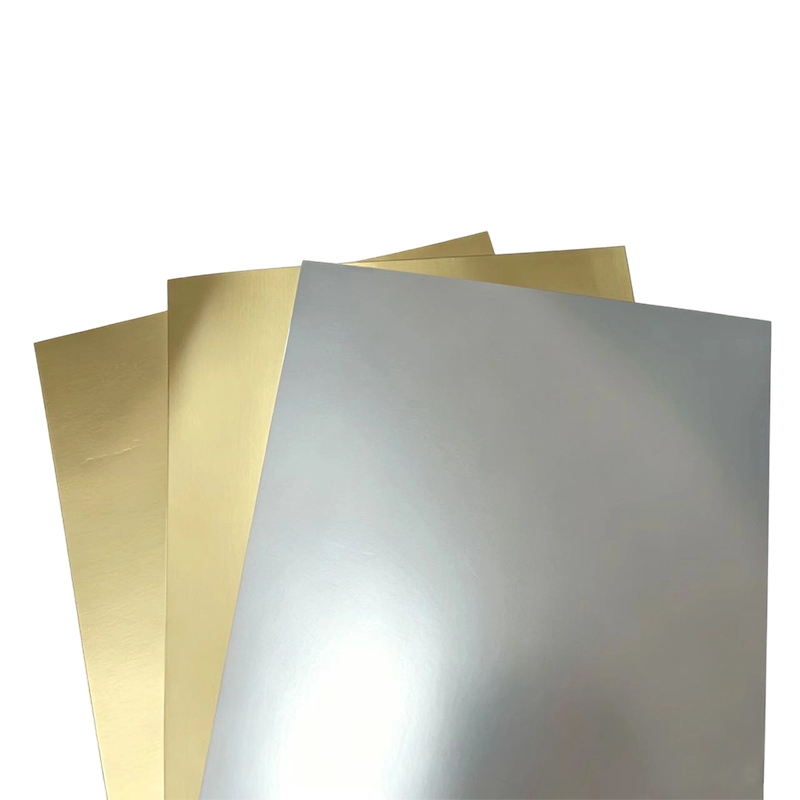
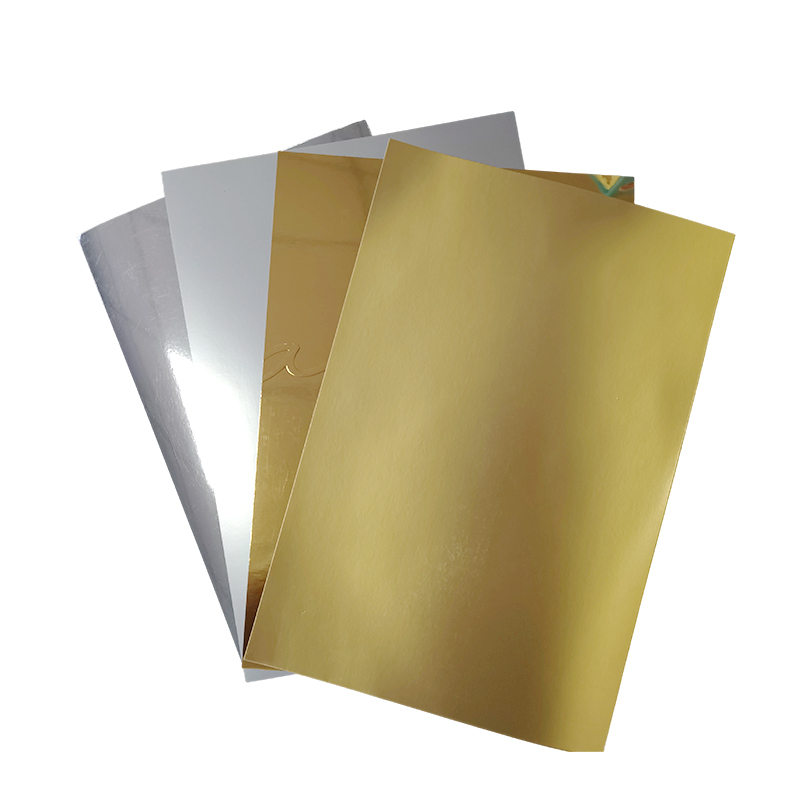
Aluminum foil cardboard is a composite material produced by laminating one or more layers of aluminum foil to a paperboard or cardboard substrate using adhesive bonding, heat lamination, or extrusion coating. The result combines the structural rigidity and printability of paperboard with the barrier, reflective, and thermal properties of aluminum foil—creating a material that neither component could achieve independently.
The manufacturing process begins with a base substrate, typically solid bleached sulfate (SBS) board, gray chipboard, corrugated medium, or kraft paperboard, selected for its caliper (thickness), stiffness, and surface quality. Aluminum foil in gauges ranging from 6 microns to 25 microns is then bonded to one or both faces of the substrate. In adhesive lamination, a water-based or solvent-based adhesive is applied to the foil or substrate surface, the two are pressed together under controlled temperature and pressure, and the composite is wound into rolls or cut into sheets. Extrusion lamination uses a layer of molten polyethylene between the foil and board, which bonds both surfaces on cooling and adds a secondary moisture barrier at the interface.
Foil gauge is the most consequential specification in aluminum foil cardboard production. Thinner foils (6–9 microns) are economical and sufficient for decorative applications and moderate moisture barriers, but they are prone to pinholing—microscopic gaps in the foil layer that compromise barrier performance. Foils of 12 microns and above provide more reliable continuous coverage and are specified wherever barrier integrity is critical for food safety, pharmaceutical containment, or thermal insulation performance.
Key Properties That Define Performance
The performance of aluminum foil cardboard across its application range derives from four interacting property sets: barrier performance, thermal behavior, structural characteristics, and surface qualities.
Barrier Performance
Aluminum foil is impermeable to moisture vapor, oxygen, light, and most gases when free of pinholes. In laminated form, the foil layer gives aluminum foil cardboard barrier properties that paperboard alone cannot approach. Water vapor transmission rate (WVTR) for a well-laminated foil cardboard composite typically falls below 0.1 g/m²/day at 38°C and 90% relative humidity—compared to several hundred g/m²/day for uncoated paperboard. Oxygen transmission rate (OTR) is similarly reduced by several orders of magnitude. These properties directly determine shelf life extension in food packaging applications and protection effectiveness in pharmaceutical and electronic component packaging.
Thermal Behavior
Aluminum reflects approximately 95–97% of radiant heat energy, making foil-laminated cardboard an effective thermal insulator in packaging and construction applications. In insulated packaging, the foil face reflects radiant heat away from the package contents, slowing temperature rise significantly compared to plain paperboard or foam alternatives. This reflective performance is largely independent of foil thickness above about 9 microns—a 9-micron foil and a 25-micron foil reflect radiant energy at nearly equivalent rates. The difference between gauges is primarily in barrier integrity and mechanical handling robustness, not thermal reflectivity.
Structural Characteristics
The paperboard substrate provides the structural contribution—stiffness, compressive strength, fold-and-crease behavior, and die-cutting performance. The foil laminate adds negligible structural stiffness at typical gauges but contributes to tear resistance and puncture resistance at the surface layer. The lamination bond strength is critical for converting operations: a composite with inadequate foil-to-board adhesion will delaminate under the stresses of scoring, folding, or die-cutting, producing defective packaging and increased waste. Bond strength is typically measured by peel test and specified in N/15mm; values above 1.5–2.0 N/15mm are expected for converting-grade material.
Surface Qualities
The foil surface can be supplied in bright (mirror) finish, matte finish, or embossed textures. Bright foil provides the high-gloss reflective appearance associated with premium packaging for confectionery, cosmetics, and pharmaceutical blister packs. Matte foil accepts gravure and flexographic printing more uniformly than bright foil and is preferred for applications requiring high print resolution. Lacquer coatings applied over the foil surface can enhance printability further, add heat-seal capability, or provide protection against abrasion and chemical contact during product filling and distribution.
Common Grades and Substrate Combinations
The substrate choice beneath the foil laminate determines the structural grade of the finished composite and its suitability for specific end uses.
Foil on SBS (Solid Bleached Sulfate) Board
SBS board is made from fully bleached virgin wood fiber, producing a white, smooth surface on both faces. Foil laminated to SBS board is the standard material for premium folding carton packaging—chocolate boxes, pharmaceutical cartons, cosmetic boxes, and confectionery wrappers. The white reverse side accepts offset or digital printing, while the foil face provides barrier protection and visual premium appeal. Typical caliper ranges from 250 to 400 gsm for folding carton applications.
Foil on Gray Chipboard
Gray chipboard is manufactured from recycled fiber and is significantly less expensive than SBS board. Foil on gray chipboard is used where structural rigidity and barrier performance are required but where the reverse side of the board is not visible in the finished product—inner liners for dry food packaging, backing boards for blister packs, and heavy-duty wrapping applications. The recycled fiber content means gray chipboard does not offer the same surface smoothness or brightness as SBS, limiting its suitability for high-quality printed applications.
Foil on Corrugated Board
Applying aluminum foil to corrugated board—either to the liner facing or as a complete laminate—produces an insulated structural packaging material used for temperature-sensitive goods including fresh produce, pharmaceuticals, and frozen food. The corrugated structure provides cushioning and compressive strength while the foil layer delivers thermal reflectivity. This combination is increasingly used as an alternative to expanded polystyrene (EPS) insulated boxes in cold chain packaging, driven by recyclability requirements that EPS cannot meet in most markets.
Foil on Kraft Paperboard
Kraft-based foil laminates offer high tear and burst strength from the long-fiber kraft substrate combined with foil barrier properties. They are common in industrial packaging for moisture-sensitive hardware, electronic components, and chemical products, as well as in food service applications such as grease-resistant wraps and oven-ready packaging where the material must withstand handling stress in addition to providing barrier function.
| Substrate | Fiber Type | Print Quality | Structural Grade | Primary Use |
|---|---|---|---|---|
| SBS Board | Virgin bleached | Excellent | Medium | Premium folding cartons, confectionery |
| Gray Chipboard | Recycled | Low | Medium–High | Food liners, blister backing |
| Corrugated Board | Virgin / recycled | Moderate | High | Cold chain, insulated shipping boxes |
| Kraft Paperboard | Virgin kraft | Good | High | Industrial, food service wraps |
Applications Across Industries
Aluminum foil cardboard serves a broader range of end markets than its packaging-centric reputation suggests. Understanding where and why it is specified across industries clarifies which performance properties drive demand in each sector.
Food and Beverage Packaging
This is the largest single application sector. Chocolate and confectionery packaging uses foil-laminated SBS board for the combination of barrier protection against moisture and oxygen, thermal reflectivity that slows temperature-driven bloom, and premium visual appearance. Dairy products including butter, margarine, and processed cheese use foil cardboard wraps where the foil provides a grease barrier and the board provides structure for retail display. Ready-meal trays laminated with foil board are oven-safe when the foil face is toward the food, withstanding temperatures up to approximately 200°C for short durations. Aseptic packaging for liquid foods uses foil cardboard laminates as the core barrier layer in multi-layer structures that include polyethylene and sometimes additional functional coatings.
Pharmaceutical Packaging
Blister pack backing materials, strip pack substrates, and carton liners for moisture-sensitive solid dosage forms use foil cardboard composites as primary or secondary barrier packaging. Regulatory requirements for pharmaceutical packaging—including ICH Q1A stability testing guidelines and USP container standards—mandate measurable barrier performance that foil-laminated board reliably delivers. Child-resistant and senior-friendly opening features are engineered into foil cardboard blister backing through scoring patterns that require deliberate multi-step opening while maintaining barrier integrity until the point of dispensing.
Cold Chain and Insulated Packaging
Temperature-sensitive logistics—pharmaceutical cold chain, fresh produce distribution, meal kit delivery—increasingly uses foil-laminated corrugated board as an insulated liner or box construction material. The foil reflects radiant heat while the corrugated air pockets provide conductive insulation, and the board structure maintains package integrity through distribution handling. Life-cycle assessments comparing foil corrugated to EPS foam insulation generally favor the foil corrugated option on recyclability and end-of-life processing, a differentiation that is increasingly relevant in procurement specifications from major logistics operators and retailers.
Construction and Building Materials
Beyond packaging, foil-laminated board is used in construction as a vapor barrier facing for insulation batts, as a radiant barrier in roof and wall assemblies, and as a backing material for acoustic panels and decorative wall coverings. In these applications, the foil's reflective and vapor-barrier properties are the primary functional drivers rather than its packaging attributes. Building-grade foil laminated board is produced to different specifications than packaging grade—emphasis shifts from food-contact compliance and printability to long-term dimensional stability, fire rating, and resistance to construction site handling conditions.
Specification and Sourcing Considerations
Sourcing aluminum foil cardboard requires defining specifications across several interdependent parameters. Incomplete specifications lead to material that meets individual test criteria but underperforms in the converting or end-use environment.
- Foil gauge and alloy: Specify the minimum foil thickness in microns and the aluminum alloy—1235 or 8011 are standard food-packaging alloys; 1100 is used for industrial applications. Confirm whether the specification is nominal or minimum gauge, as the distinction affects barrier reliability.
- Substrate grade and caliper: Define the board type (SBS, chipboard, kraft, corrugated), basis weight in gsm, and caliper in microns or millimeters. For folding carton applications, specify the bending stiffness (mN·m) required in machine and cross direction to ensure the carton holds its shape after filling.
- Lamination method and bond strength: Specify the minimum peel strength and the lamination chemistry (adhesive type or extrusion coating polymer). For food-contact applications, confirm the adhesive or extrusion resin complies with applicable food safety regulations—FDA 21 CFR in the United States, EU Regulation 10/2011 for plastic contact materials in Europe.
- Barrier performance targets: Define WVTR and OTR requirements at the conditions relevant to the end-use environment. These values should be measured on the finished laminate, not calculated from component properties, since lamination process variables affect the actual barrier achieved.
- Converting compatibility: If the material will be die-cut, scored, folded, or heat-sealed, confirm that samples pass converting trials before committing to volume production. Foil cardboard that performs well on barrier and structural tests may still produce foil cracking at scores or delamination at folds if the laminate construction is not optimized for the specific converting process.
- Recyclability documentation: In markets with extended producer responsibility (EPR) legislation, confirm the recyclability classification of the composite. Foil-laminated board is accepted in paper recycling streams in some jurisdictions and rejected in others depending on foil weight fraction and delamination behavior in the repulping process. Supplier documentation of recyclability assessment simplifies compliance reporting.