English
  Español
  عربى
عربى 

Industry News
Content
- 1 What Is Holographic Cardstock Paper?
- 2 Common Holographic Pattern Types and What They Look Like
- 3 Key Specifications to Understand Before Buying
- 4 Applications: Where Holographic Cardstock Is Used
- 5 Printing on Holographic Cardstock: What Works and What to Avoid
- 6 Sourcing and Buying Guide: How to Evaluate Quality
What Is Holographic Cardstock Paper?
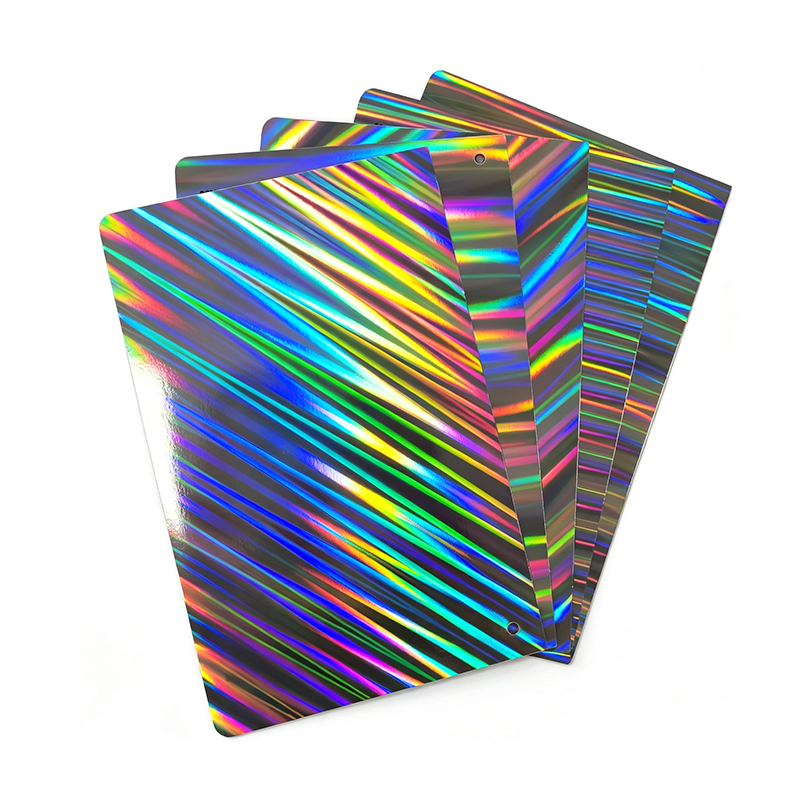
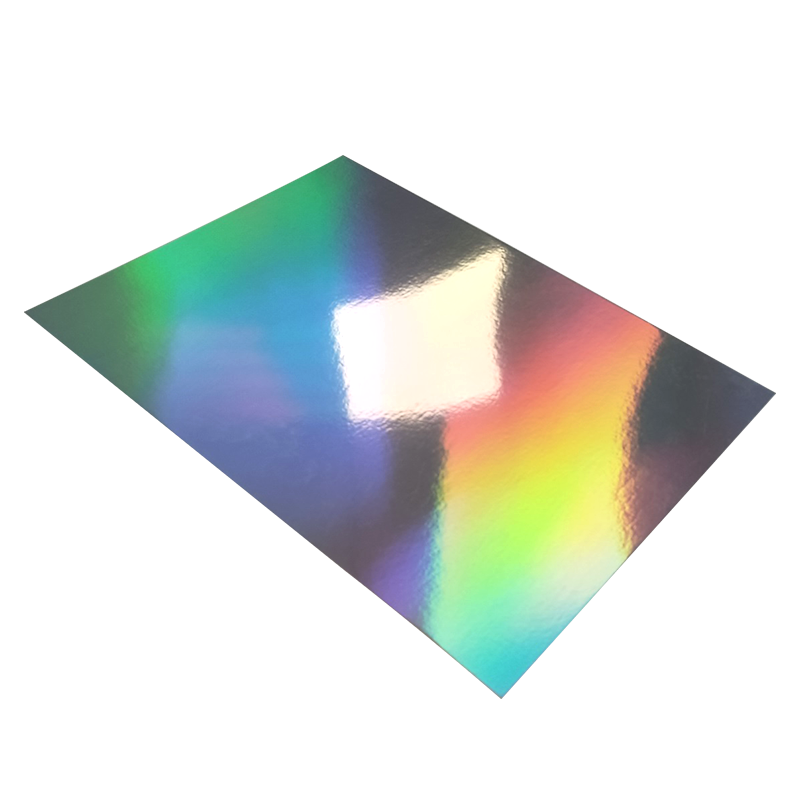
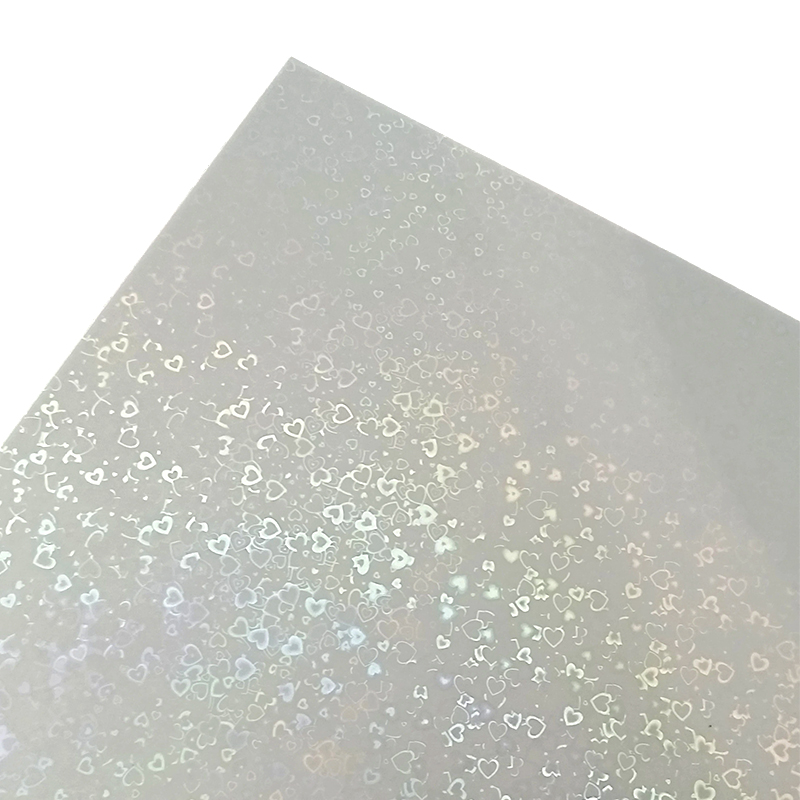
Holographic cardstock paper is a heavyweight substrate—typically 250–350 gsm—whose surface has been laminated or coated with a micro-embossed metallic film that diffracts light into shifting rainbow patterns. Unlike standard foil cardstock, which reflects a single flat metallic color, holographic cardstock uses a diffraction grating embossed into the film layer to split ambient light into its spectral components, producing the characteristic prismatic shimmer that changes with viewing angle and light source.
The structure of a typical sheet is three layers: a paper or board core that provides rigidity and printability, a polyester (PET) carrier film bonded to the core surface, and a vacuum-metallized aluminum layer on top of the film that carries the holographic embossing pattern. Some premium grades add a clear protective lacquer over the metallized layer to improve scuff resistance and print adhesion. This construction gives the material its dual identity—functional card substrate on one side, high-impact decorative surface on the other.
Common Holographic Pattern Types and What They Look Like
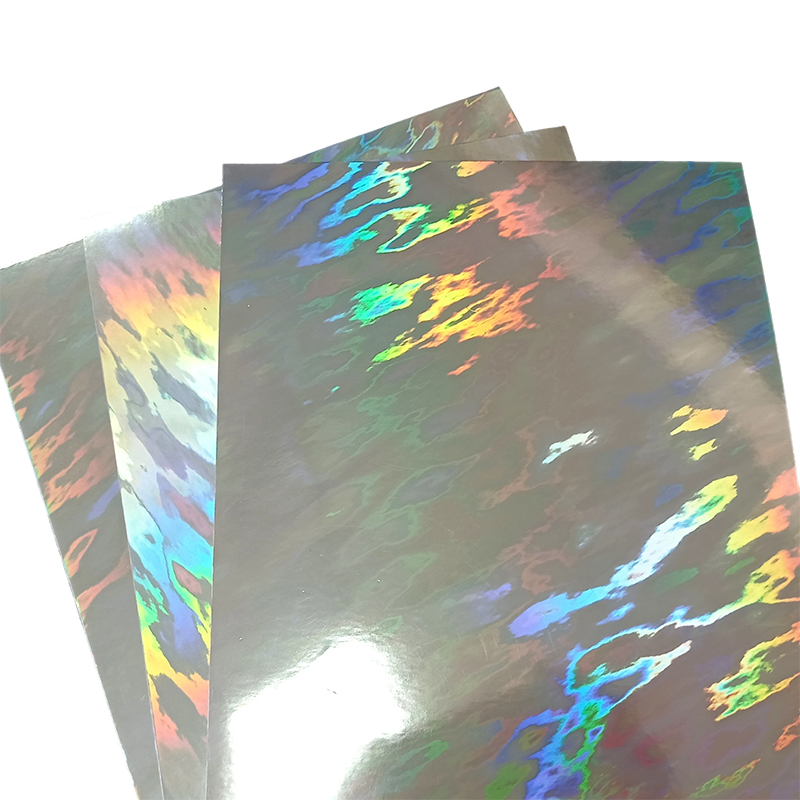
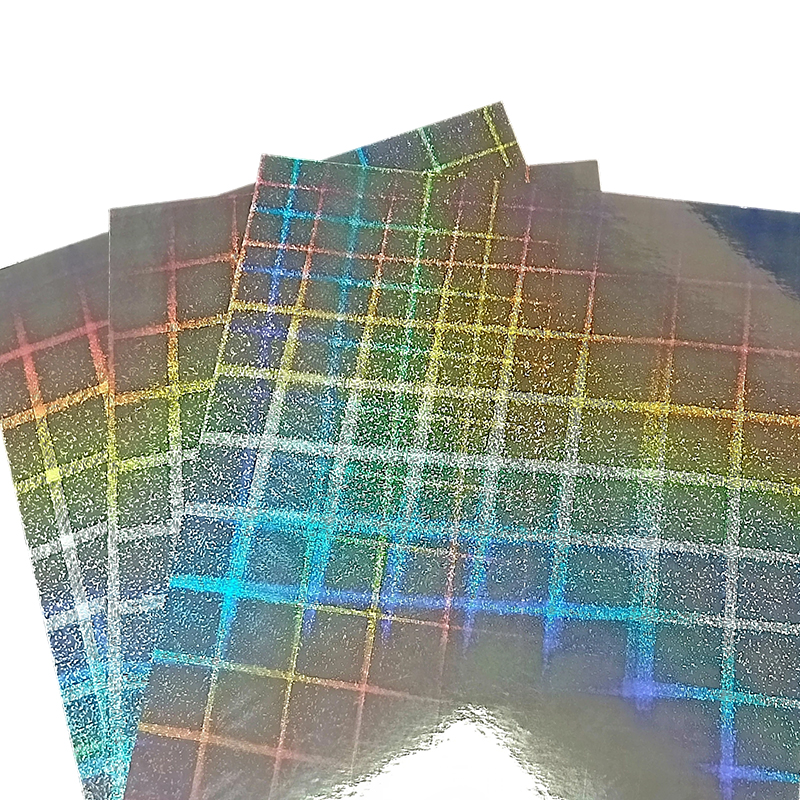
The embossed pattern on the film determines the visual character of the finished sheet. Suppliers typically offer several standard patterns, and custom patterns can be tooled for large-volume orders:
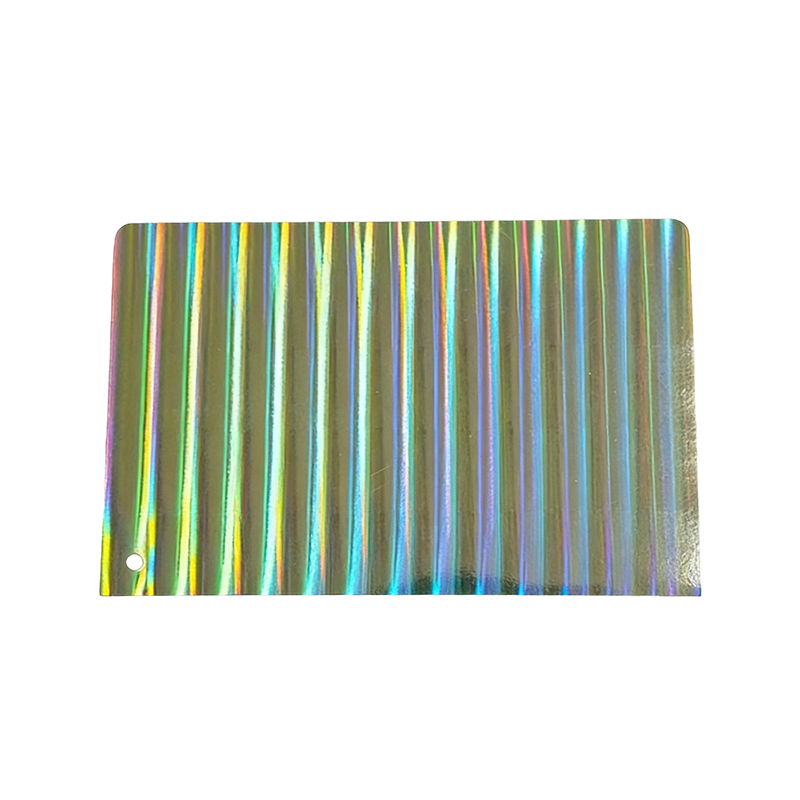
- Rainbow / Spectrum — The most common pattern. The entire surface shows a continuous sweep of spectral colors that travel across the sheet as the viewing angle changes. Works at any scale and suits most general decorative applications.
- Starburst / Sunburst — Light radiates outward from multiple focal points across the sheet surface, creating a firework-like effect. Popular for gift wrapping, premium retail bags, and party supplies.
- Dot Matrix / Pixel — Fine geometric dot arrays produce a crisp, structured shimmer that photographs well under studio lighting. Frequently used for trading card backs, collectible packaging, and security labels.
- Wave / Ripple — Concentric or parallel wave patterns create a fluid, water-like movement across the surface. Suits beauty and cosmetics packaging where an organic, flowing aesthetic is preferred.
- Silver / Gold Mirrored Holographic — A metallic base color (silver or gold) combined with a subtle holographic overlay. Produces a more restrained, premium-adjacent effect compared to full rainbow patterns; common in luxury card and invitation printing.
Key Specifications to Understand Before Buying
Holographic cardstock is sold across a wide range of grades. The following specifications determine whether a sheet will perform correctly for a given application:
| Specification | Typical Range | Why It Matters |
|---|---|---|
| Basis Weight (gsm) | 200–400 gsm | Determines rigidity; 250–300 gsm suits most card and packaging applications |
| Film Lamination Side | Single-side or double-side | Double-side lamination prevents curl and allows holographic finish on both faces |
| Print Compatibility | Offset, digital, screen | Not all grades accept toner or inkjet ink without a primed reverse side |
| Surface Lacquer | With or without topcoat | Lacquered grades resist fingerprints and scuffing; uncoated grades are more affordable |
| Sheet Size | A4, A3, SRA3, 12×12 in | Craft and retail packs favor A4/letter; commercial print uses SRA3 or larger roll stock |
| Cutting and Scoring | Die-cut, hand, plotter | The PET film layer can delaminate at cut edges if blades are dull; sharp tooling is essential |
Applications: Where Holographic Cardstock Is Used
The material's combination of structural weight and eye-catching surface makes it useful across a broader range of end uses than decorative appeal alone would suggest:
Greeting Cards and Invitations
Holographic cardstock is widely used as a base or insert layer for premium greeting cards, wedding invitations, and event stationery. The prismatic surface reduces the need for additional embellishments—foil stamping or spot UV—because the substrate itself provides visual complexity. A plain black or white printed design on holographic cardstock achieves a finished look that would require multiple decorating passes on standard white board.
Gift Boxes and Retail Packaging
In retail packaging, 300–350 gsm holographic cardstock is used to construct jewelry boxes, cosmetic cartons, and gift set sleeves where shelf impact directly influences purchase decisions. Studies in retail display psychology consistently find that iridescent and metallic packaging increases dwell time at the shelf and is associated with higher perceived product value by consumers.
Trading Cards and Collectibles
The trading card and collectibles market uses holographic cardstock for foil-parallel inserts and special edition card backs. The dot-matrix and fine-line holographic patterns used in this segment also serve an incidental anti-counterfeiting function, since the embossing tooling required to replicate precise grating patterns is a significant barrier to unauthorized reproduction.
Craft and DIY Projects
At the consumer end of the market, A4 and 12×12 inch holographic cardstock sheets are sold for scrapbooking, card making, gift tag production, and paper craft. Craft-grade material is typically lighter (200–250 gsm) and sold in multi-sheet packs of mixed or single patterns. Compatibility with home die-cutting machines—Cricut, Silhouette, and similar—is a commonly evaluated criterion in this segment.
Printing on Holographic Cardstock: What Works and What to Avoid
The metallic film surface presents printing challenges that standard coated board does not. Understanding these in advance prevents wasted material and reprints:
- Offset lithography — The most reliable printing method for holographic cardstock at commercial scale. UV-cured offset inks bond well to the lacquered surface and do not require extended drying time. Standard oil-based inks can take significantly longer to dry on non-absorbent holographic surfaces and risk set-off in delivery stacks.
- Digital (toner-based) printing — Works on grades specifically prepared with a toner-receptive coating on the reverse side. Printing directly on the holographic face with most desktop laser printers will not produce reliable adhesion; the toner sits on the surface rather than fusing into it.
- Inkjet printing — Aqueous inkjet inks bead on untreated holographic film surfaces. Inkjet-compatible holographic cardstock uses a micro-porous coating over the film that absorbs ink droplets; without this coating, print quality is unusable. Always verify inkjet compatibility with the specific grade before ordering in volume.
- Screen printing — Works well for bold single-color or limited-color graphics directly on the holographic face. The opacity of screen printing inks means they show clearly against the metallic ground without requiring a white underbase, unlike translucent digital inks.
- Foil stamping over holographic — Technically possible but rarely adds value, since the substrate is already metallic. Where foil stamping is used on holographic cardstock, it is typically a matte or colored foil applied to create contrast against the iridescent background rather than to add shine.
Sourcing and Buying Guide: How to Evaluate Quality
Holographic cardstock quality varies considerably across suppliers, and the differences are not always apparent from product images or descriptions. The following criteria help distinguish well-made material from grades that will perform poorly in production:
- Film adhesion consistency — Flex a corner of the sheet sharply. On a well-bonded grade, the film remains fully attached to the board core. Delamination at the fold edge indicates poor adhesion that will worsen during cutting, scoring, and box assembly.
- Pattern sharpness and uniformity — Hold the sheet under a single-point light source (a lamp rather than diffuse daylight) and tilt it slowly. High-quality embossing produces crisp, defined color separation as the angle changes. Muddy or washed-out color response indicates shallow embossing depth or low-quality metallization.
- Caliper consistency — For packaging applications, measure thickness at multiple points across a sheet. Variation of more than ±5% across the sheet indicates uneven board core or film lamination, which causes registration problems in die-cutting and folding.
- Moisture and curl resistance — Single-side laminated holographic cardstock is prone to curling in humid environments as the uncoated back absorbs moisture while the film face does not. Double-side laminated grades or grades with a moisture-barrier back coating handle this significantly better for packaging applications in humid climates.
- Request physical samples before volume orders — Color representation of holographic materials in photography is inherently unreliable because cameras cannot capture angle-dependent light diffraction. A printed swatch or unprinted sheet sample is the only reliable basis for approving a grade for production use.
For buyers sourcing holographic cardstock for commercial packaging or print production, ordering a sample pack across two or three candidate grades and running a small test through your actual printing and finishing process is the most reliable way to avoid costly mismatches between specification and real-world performance.