English
 Español
 عربى
Home / News / Industry News / High-Speed Automatic Die-Cutting: Why Aluminum Foil Boards Need Superior Flexibility
Industry News


Content
High-speed automatic die-cutting has become the backbone of modern packaging production. As folding carton lines accelerate toward greater throughput, the materials running through them must satisfy increasingly demanding mechanical requirements. Aluminum foil boards present a special challenge because they combine a metallic foil layer with a paperboard base, and the interaction between these layers decides whether the board survives high-speed processing without cracks, delamination, or edge defects. This article explains why superior flexibility is not a luxury but a technical necessity for aluminum foil boards used in high-speed automatic die-cutting.
High-speed automatic die-cutting is a process in which sheets of board are fed continuously into a cutting press, where steel rules press through the material to create cut lines, creases, and perforations in a single pass. Modern flatbed die-cutting machines operate at speeds of 6,000 to 9,000 sheets per hour, while rotary die-cutters can process even higher volumes. At these speeds, the material has only a few milliseconds to respond to the mechanical forces applied by the die.
Every die-cutting cycle involves three principal actions:
All three actions depend on the material's ability to deform and recover in a controlled manner. A board that is too rigid will fracture under the creasing force; a board that is too soft will produce poorly defined edges and weak fold lines.
In the context of aluminum foil boards, flexibility refers to the material's capacity to bend, fold, and conform to tooling geometry without cracking, delaminating, or losing surface integrity. It is the property that allows the board to pass through the creasing zone, where the paperboard is compressed and displaced, and then to fold cleanly along the crease line during the final packaging operation.
At high speed, flexibility becomes even more important because deformation happens faster. A material with low flexibility concentrates stress at the crease point, causing the foil layer to fracture and the paperboard to tear. A flexible board, by contrast, distributes stress evenly across the crease zone, producing a clean, well-formed fold that unfolds reliably on the packaging line.
When an aluminum foil board lacks sufficient flexibility, high-speed die-cutting exposes the weakness immediately. Common defects include:
Each of these defects leads to rejected sheets, reduced yield, and costly machine stoppages. In high-volume packaging production, even a marginal increase in waste can erase the profit margin of an entire order.
Aluminum foil boards are composite materials. A thin aluminum foil is bonded to a paperboard substrate through an adhesive or transfer process. The foil supplies the metallic appearance and barrier properties, while the paperboard provides stiffness, caliper control, and dimensional stability.
This composite structure creates a mechanical mismatch. Aluminum is a ductile metal that work-hardens under repeated bending, while paperboard is a fibrous material with different behavior under compression and tension. When the two layers are forced to bend together, differences in elastic response can cause the foil to wrinkle, crack, or separate from the board.
A well-engineered aluminum foil board resolves this mismatch by balancing foil thickness, base paper density, and adhesive bonding strength. Gold-foil-backed cardboard, for example, is widely used in luxury cosmetics and wine packaging, where its bright metallic finish must survive tight-radius folds without fracture. Our gold-foilbacked cardboard is manufactured with a carefully selected paper substrate and controlled adhesive coating to meet exactly this requirement.
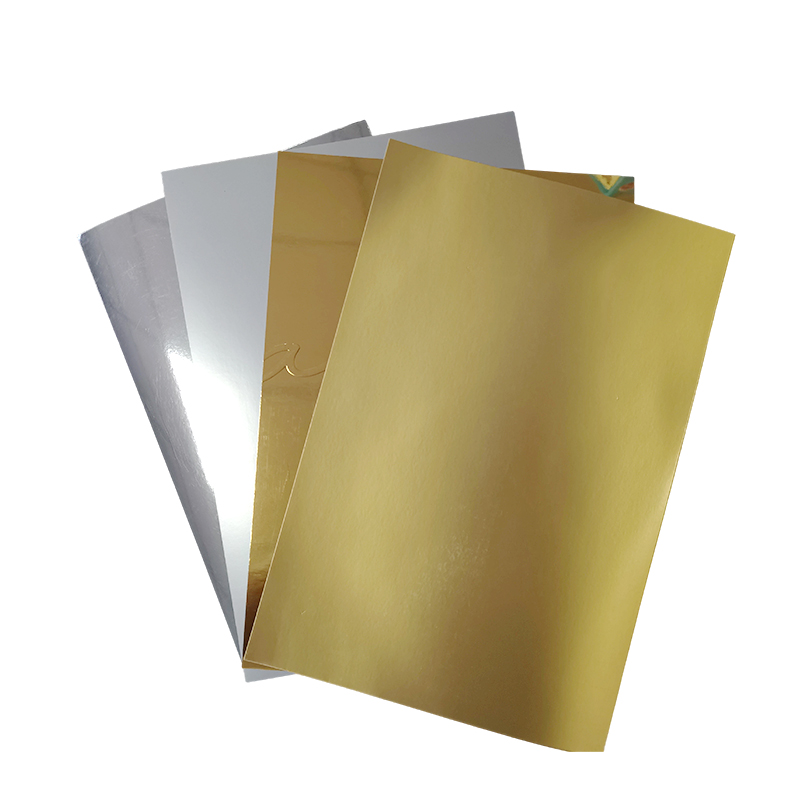 Gold Foil-Backed Cardboard for Luxury PackagingThis composite material pairs aluminum foil with coated paper or cardstock, offering metallic luster, rigidity, and barrier protection. Its controlled flexibility suits tight-radius folds, making it relevant for high-end cosmetics and wine packaging.View Product →
Selecting the right aluminum foil board requires evaluating several properties that together determine die-cutting reliability. The table below summarizes the key criteria and their influence on flexibility.
| Property | Typical Range | Impact on Flexibility |
|---|---|---|
| Grammage | 200-450 g/m² | Higher grammage increases stiffness but reduces bendability. |
| Foil thickness | 6-30 μm | Thicker foil enhances barrier but raises crack risk at creases. |
| Base paper type | FBB, SBS, kraft | Fiber composition and refining determine fold endurance. |
| Moisture content | 8-10% | Proper moisture keeps fibers supple during creasing. |
| Internal bond strength | 0.5 J/m² or higher | Strong bonding prevents foil and fiber delamination. |
| Surface smoothness | High printer-grade | Smooth surfaces reduce friction and dust generation. |
These values serve as general guidelines. The optimal combination depends on the packaging structure, crease geometry, folding angle, and the speed of the filling line that the finished carton must tolerate.
Certain packaging segments place especially high demands on aluminum foil board flexibility because their carton structures involve deep creases, multiple folds, or thin material calipers.
The cosmetics industry is one example. Cosmetic folding cartons often feature sharp angles, intricate crease patterns, and demanding filling speeds. A board that cracks during forming production immediately raises scrap rates and delays time-to-market. Wine and spirits packaging, meanwhile, uses heavier boards with deep scores, requiring the foil layer to follow the fold without fracture while maintaining a mirror-like surface appearance.
For these high-demand applications, silver-foilbacked boards with balanced flexibility are often the preferred choice. They provide a premium metallic aesthetic across a wide range of carton styles, from rigid presentation boxes to automated folding cartons. The combination of a stable paper substrate and a thin, consistently bonded foil layer ensures that the board performs predictably at high die-cutting speed.
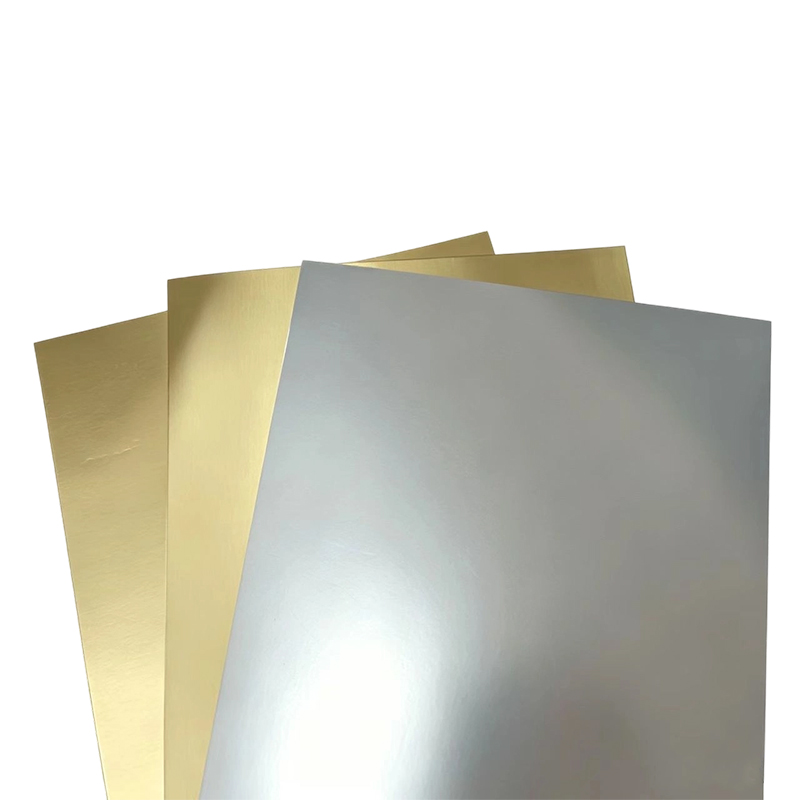 Silver Foil-Backed Cardboard for Folding CartonsA silver metallic board with a stable paper substrate and consistently bonded foil layer, designed for predictable die-cutting at high speeds. Its bright finish and barrier properties support premium packaging across rigid boxes and automated cartons.View Product →
Packaging engineers need objective methods to compare flexibility across different foil board products. Standard evaluation approaches include:
For a broader comparison of foil board constructions and their properties, review our guide to aluminum foil cardboard types, properties, and applications. It explains how grammage, foil thickness, and base paper selection interact in real packaging projects.
Flexibility describes how easily a board bends along a crease without cracking, while stiffness describes how strongly the board resists bending under an applied load. A well-balanced die-cutting board is stiff enough to feed, register, and hold the package shape, yet flexible enough to fold cleanly at speed.
Only to a limited degree. Reducing cutting speed, deepening scoring grooves, or using softer creasing matrices can lower stress on the material. However, these adjustments reduce throughput and cannot fully compensate for an inherently rigid board construction.
Thicker foil provides better barrier performance and a deeper metallic look, but it also work-hardens quickly at the crease, raising the risk of cracking. The ideal foil thickness depends on the folding angle, board grammage, and the application's structural requirements.
At higher speeds, deformation forces are applied in a shorter time, giving the material less chance to redistribute stress. Flexible materials respond quickly and uniformly, avoiding localized strain concentrations that produce cracks, tears, and dusting.
Superior flexibility is a non-negotiable requirement for aluminum foil boards used in high-speed automatic die-cutting. It determines whether a packaging line runs smoothly or suffers from cracking, delamination, and avoidable waste. By understanding the mechanical demands of die-cutting, selecting boards with the right balance of stiffness and bendability, and partnering with a supplier that engineers materials for real production conditions, packaging producers can achieve both speed and quality.
When evaluating the next material order, ask for creasability data, fold endurance results, and documented die-cutting trial outcomes. These technical indicators reveal far more about real-world performance than surface appearance alone.