English
  Español
  عربى
عربى
Home / News / Industry News / Holographic Cardstock Types: Solid vs Linear Patterns for Craft Projects
Industry News


Content
Holographic cardstock is premium paperboard featuring micro-embossed surface patterns that diffract light into rainbow spectral effects. Unlike simple metallic or glitter papers, holographic cardstock creates three-dimensional depth illusions through interference patterns that shift color based on viewing angle. Standard weights range from 250 to 350 gsm, providing rigidity for structural applications including greeting cards, packaging, and display materials while maintaining compatibility with die-cutting and scoring equipment.
The manufacturing process laminates polyester or metalized film layers onto paperboard substrates through thermal or adhesive bonding. Micro-embossing rollers imprint diffraction gratings at resolutions exceeding 1,000 lines per millimeter, creating the characteristic color-shifting effects. Quality variations depend on embossing precision, film thickness, and base paper smoothness, with premium grades achieving 90-degree viewing angle color shifts and budget options limited to 30-45 degree effect ranges.
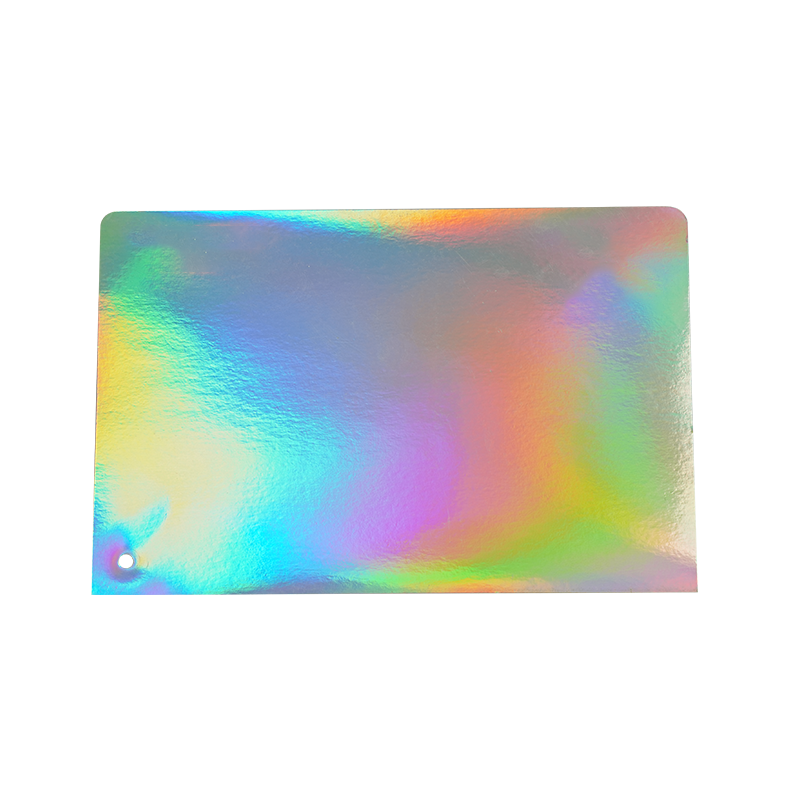
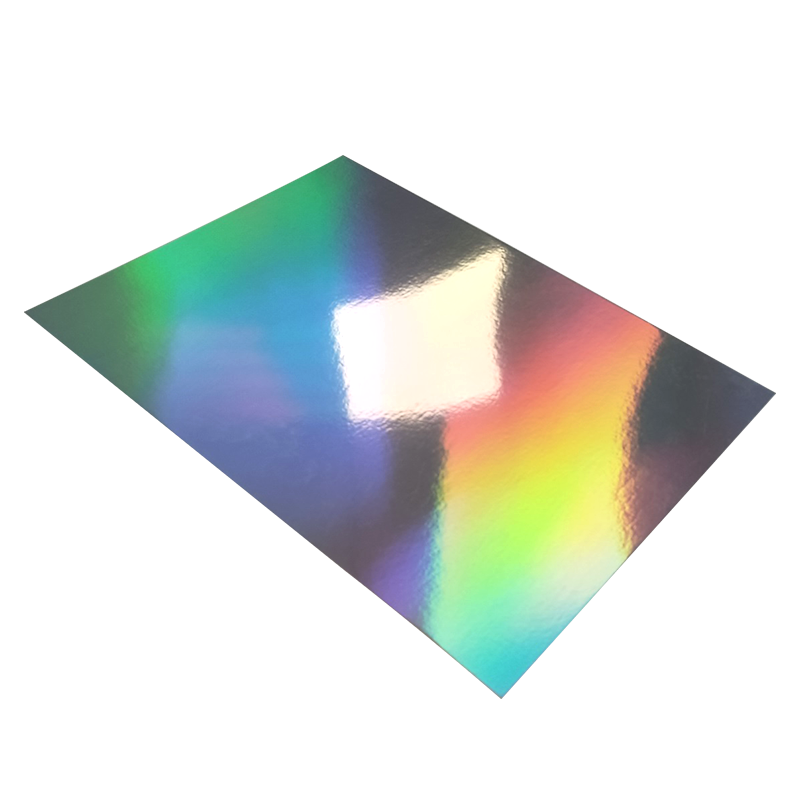
Solid holographic cardstock delivers consistent reflective effects across entire sheet surfaces without pattern interruption. The diffraction structure creates seamless color gradients that appear to flow across the material as viewing angles change, producing the appearance of liquid metal or oil slick iridescence.
Solid holographic surfaces reflect full spectrum rainbows with smooth transitions between hues. Under direct lighting, the material appears to contain depth with colors seeming to float above the physical surface. Diffuse lighting conditions reduce effect intensity but maintain subtle metallic sheen. The absence of linear patterns makes solid holographic cardstock suitable for applications requiring uninterrupted reflective fields without directional visual elements.
Solid holographic cardstock excels in applications where background consistency matters. Wedding invitations utilize solid holographic panels as accent layers behind matte text stocks, creating elegant framing without competing with typography. Packaging applications including cosmetic boxes and premium confectionery favor solid holographic substrates for luxury positioning. The uniform surface accepts foil stamping and screen printing with registration accuracy of plus or minus 0.5mm, enabling precise graphic overlays.
Silver base solid holographic cardstock provides maximum brightness and color range, reflecting 85-90% of incident light. Gold base variants shift spectral output toward warm tones, reducing blue and violet components while enhancing red and orange reflections. Custom color bases including rose gold, champagne, and copper expand design palettes for branded materials and seasonal collections. Black base solid holographic cardstock creates dramatic contrast with deep shadows punctuated by bright spectral highlights.
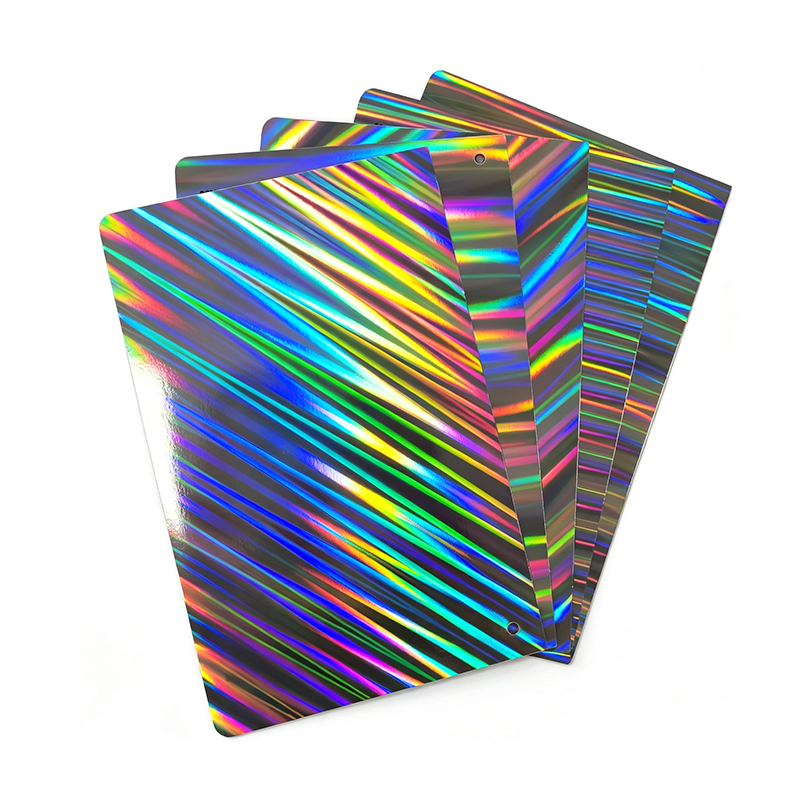
Linear holographic cardstock incorporates diffraction gratings oriented in specific directions, creating striped or textured reflective patterns that respond predictably to light and movement. These directional structures produce more controlled visual effects than solid holographic alternatives, with color shifts occurring along specific axes rather than omnidirectionally.
Horizontal linear patterns create banded rainbow effects that shift vertically as viewers move. Vertical orientations produce columnar color changes during horizontal viewing angle adjustments. Diagonal linear holographic cardstock at 45-degree angles generates dynamic corner-to-corner color flows. Fine line densities of 50-100 lines per millimeter create subtle shimmer effects, while coarse patterns at 10-20 lines per millimeter produce bold stripe appearances.
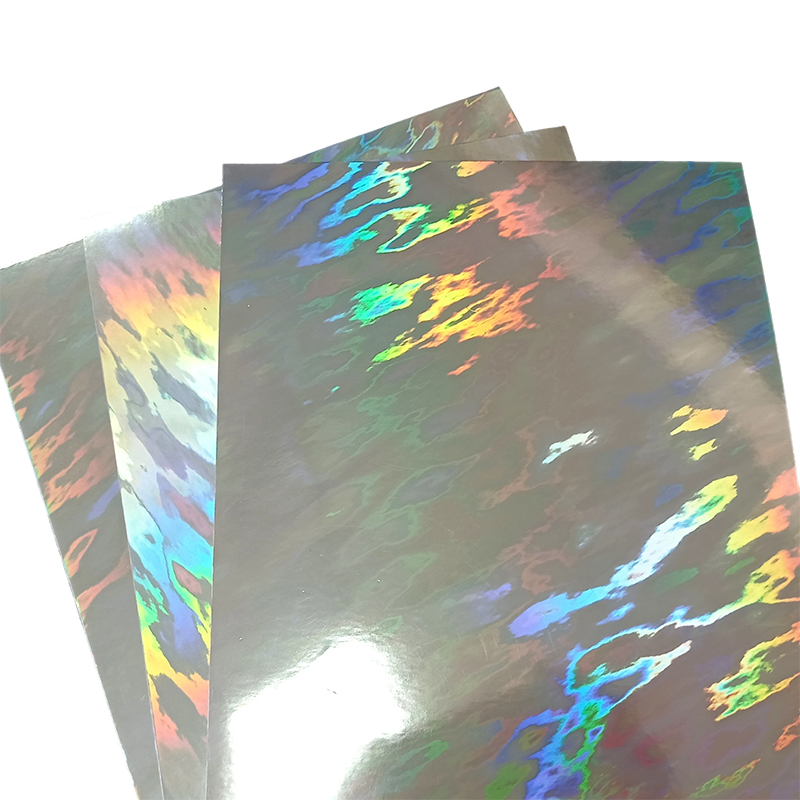
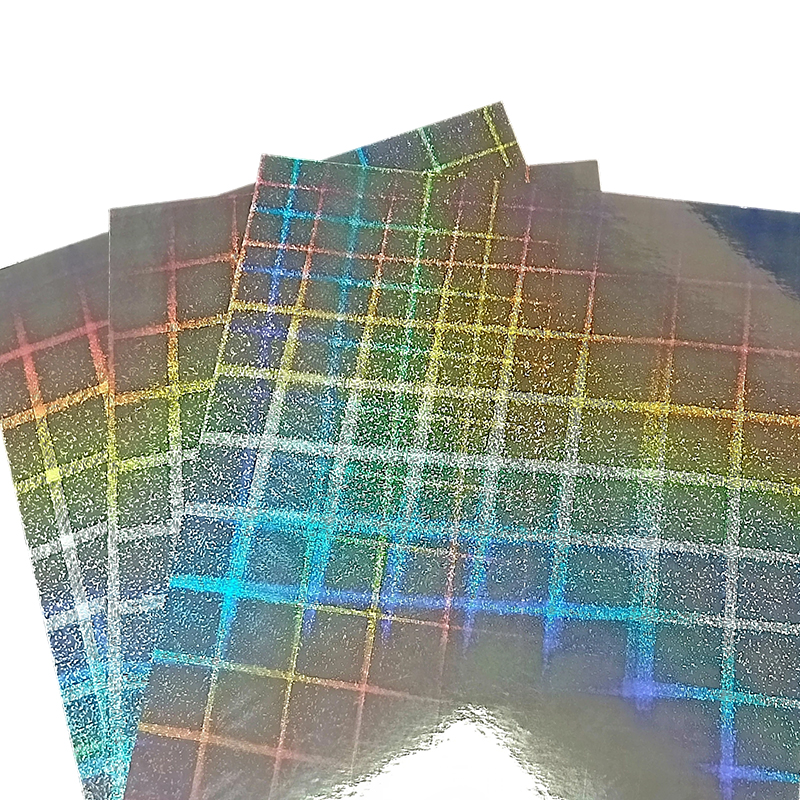
Beyond simple straight lines, linear holographic cardstock includes wave patterns creating undulating color flows, micro-prism arrays generating pixelated sparkle effects, and cross-hatched structures producing grid-like interference. Engineered patterns can simulate brushed metal, carbon fiber weaves, or fabric textures while maintaining holographic color properties. These textural linear holographic options bridge the gap between uniform solid holographic cardstock and specialty patterned papers.
Linear holographic cardstock serves specific design functions where directional emphasis guides viewer attention. Certificate borders utilize linear patterns to frame content without overwhelming text legibility. Scrapbookers employ linear holographic strips to create motion illusions on static pages. Gift packaging leverages linear patterns for ribbon and bow simulations with authentic reflective depth. The predictable light response enables designers to engineer specific viewing experiences based on anticipated display angles.
Choosing between solid and linear holographic cardstock requires evaluating project requirements across visual impact, technical compatibility, and design intent dimensions.
| Characteristic | Solid Holographic | Linear Holographic |
|---|---|---|
| Visual Effect | Fluid color wash | Directional stripe pattern |
| Light Response | Omnidirectional shift | Axis-dependent shift |
| Text Readability | Moderate contrast | High contrast on pattern |
| Die Cutting Compatibility | Excellent | Excellent |
| Printing Registration | Simple alignment | Pattern orientation critical |
| Typical Applications | Backgrounds, packaging | Accents, borders, details |
| Cost Position | Standard premium | Standard premium |
Sophisticated designs integrate both solid and linear holographic cardstock varieties. Solid holographic backgrounds establish luminous foundation layers while linear holographic die-cuts provide directional accents. Layering linear patterns over solid substrates creates moire interference effects adding visual complexity. Foil stamping on linear holographic cardstock with registration to existing patterns requires precision but yields premium results impossible with single-material approaches.
Holographic cardstock performance depends on substrate quality, coating durability, and manufacturing precision.
Standard holographic cardstock caliper measures 12-16 point (300-400 micrometers), providing stiffness for freestanding display structures. Surface gloss readings of 90-110 GU at 60 degrees exceed coated papers but remain below mirror finishes. Coefficient of friction varies from 0.15 to 0.35 depending on embossing depth, affecting feeding characteristics in high-speed printing equipment. Moisture resistance remains limited due to paperboard cores, with dimensional stability degrading above 65% relative humidity.
UV-cured screen printing achieves optimal adhesion to holographic surfaces with 3-5 micron ink deposits. Offset lithography requires oxidative drying inks with extended cure times due to non-absorbent surface characteristics. Toner-based digital printing adheres adequately for short-run applications though scratch resistance remains inferior to liquid inks. Laser cutting provides clean edges without thermal discoloration, while steel rule die cutting requires 25-30 degree blade angles to prevent edge lifting.
Holographic film surfaces resist water-based adhesives due to low surface energy. Solvent-based or hot melt adhesives achieve reliable bonds with 12-24 hour cure periods. Double-sided adhesive films formulated for metalized surfaces provide immediate bonding for assembly applications. Adhesive testing on sample pieces prevents production failures from incompatibility between holographic coatings and chosen bonding agents.
Holographic cardstock serves diverse industries leveraging visual impact for attention and premium positioning.
The crafting sector consumes holographic cardstock for card making, album covers, and dimensional embellishments. Solid holographic varieties dominate background applications while linear patterns provide accent strips and borders. Die-cutting compatibility enables intricate lace patterns and floral designs that retain reflective properties across cut edges. Archival quality concerns prompt manufacturers to offer acid-free and lignin-free substrates for memory preservation applications.
Cosmetic packaging utilizes solid holographic cardstock for gift boxes and promotional displays. Food and beverage applications favor linear holographic patterns for security elements and authenticity verification. Pharmaceutical inserts employ holographic substrates as anti-counterfeiting measures with custom diffraction patterns. The commercial printing segment demands consistent color matching across production lots, requiring supplier quality systems maintaining Delta E less than 2.0 color variation tolerances.
Award certificates and recognition materials leverage holographic cardstock for perceived value enhancement. Presentation folders with holographic accent panels differentiate corporate materials in competitive environments. Educational incentive programs utilize holographic stickers and cards for achievement recognition. These applications prioritize durability and handling resistance over maximum visual impact, favoring thicker substrates and protective laminates.
Evaluating holographic cardstock requires systematic assessment across multiple quality dimensions.
Reliable holographic cardstock suppliers maintain embossing equipment calibration protocols ensuring pattern consistency across production runs. Inventory management systems prevent age-related degradation from extended warehouse storage. Technical support capabilities assist with application-specific recommendations for solid versus linear pattern selection. Sustainability credentials including FSC-certified paperboard substrates and recyclable film constructions address environmental compliance requirements.
Holographic cardstock transforms ordinary paper projects into visually striking creations through optical physics rather than applied colorants. Solid holographic cardstock provides maximum impact for backgrounds and fields requiring uninterrupted luminosity. Linear holographic cardstock offers controlled directional effects for structured designs and text-friendly applications. Understanding the technical distinctions between these varieties enables designers to specify appropriate materials matching project requirements for visual effect, processing compatibility, and budget parameters.
As manufacturing technology advances, holographic cardstock continues expanding beyond craft applications into security printing, luxury packaging, and interactive marketing materials. The fundamental properties of diffraction and interference that create holographic effects remain constant, but pattern precision, substrate quality, and environmental sustainability evolve to meet contemporary demands. Selecting high-quality holographic cardstock from reputable suppliers ensures project success across immediate visual impact and long-term durability requirements.