English
  Español
  عربى
عربى 

Industry News
Content
- 1 What Solid Holographic Cardstock Is and How It Is Made
- 2 Raw Material Components and Their Role in Final Sheet Performance
- 3 Grammage Selection: Matching Weight to Application
- 4 Printing on Solid Holographic Cardstock
- 5 Converting Operations: Die-Cutting, Creasing, Folding, and Gluing
- 6 Typical End-Use Applications by Sector
- 7 Specifying Custom Grammages and Non-Standard Configurations
What Solid Holographic Cardstock Is and How It Is Made
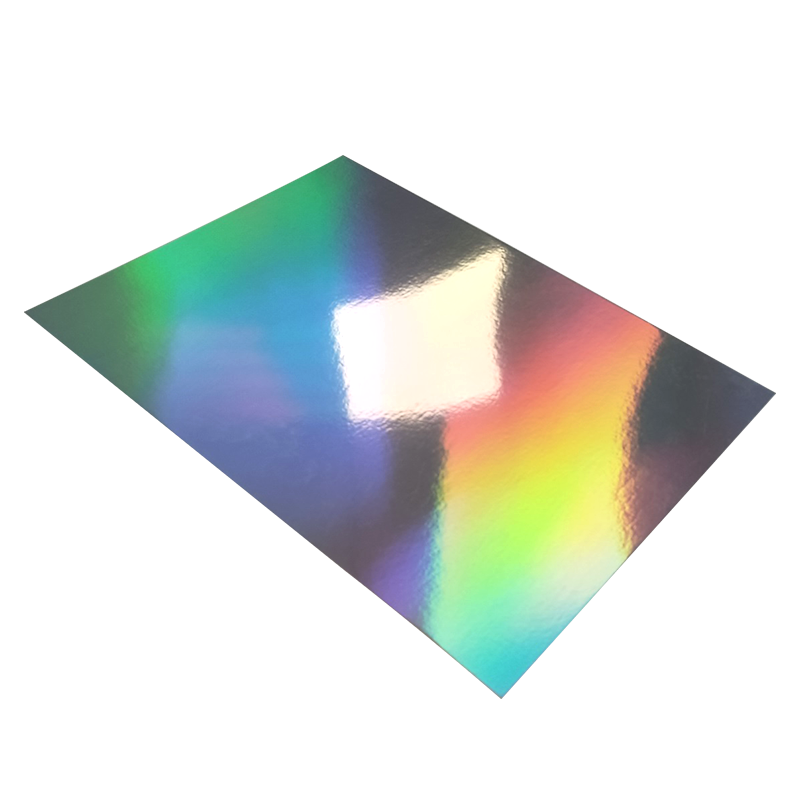
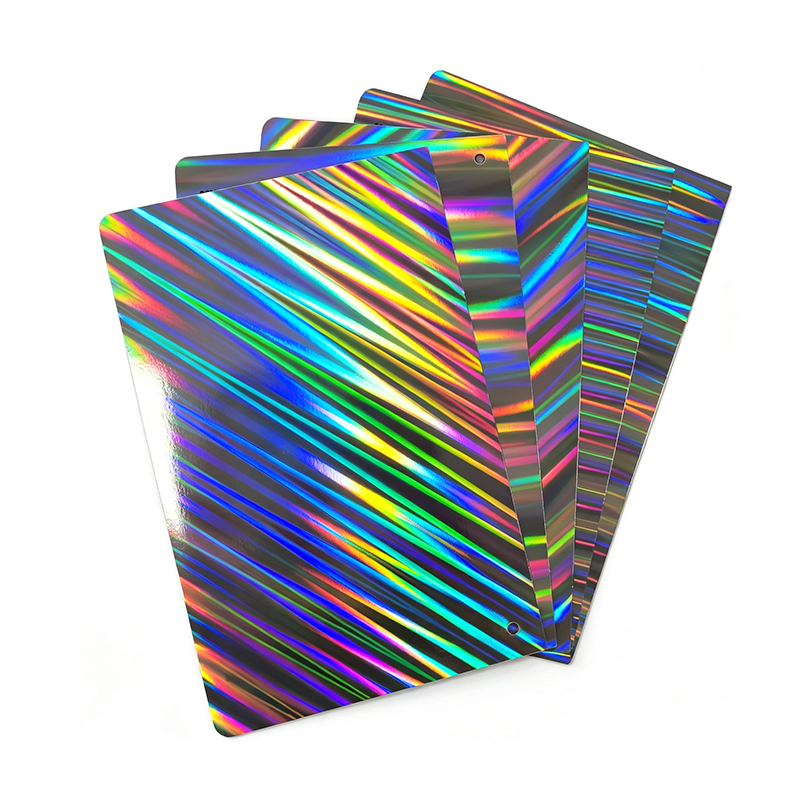
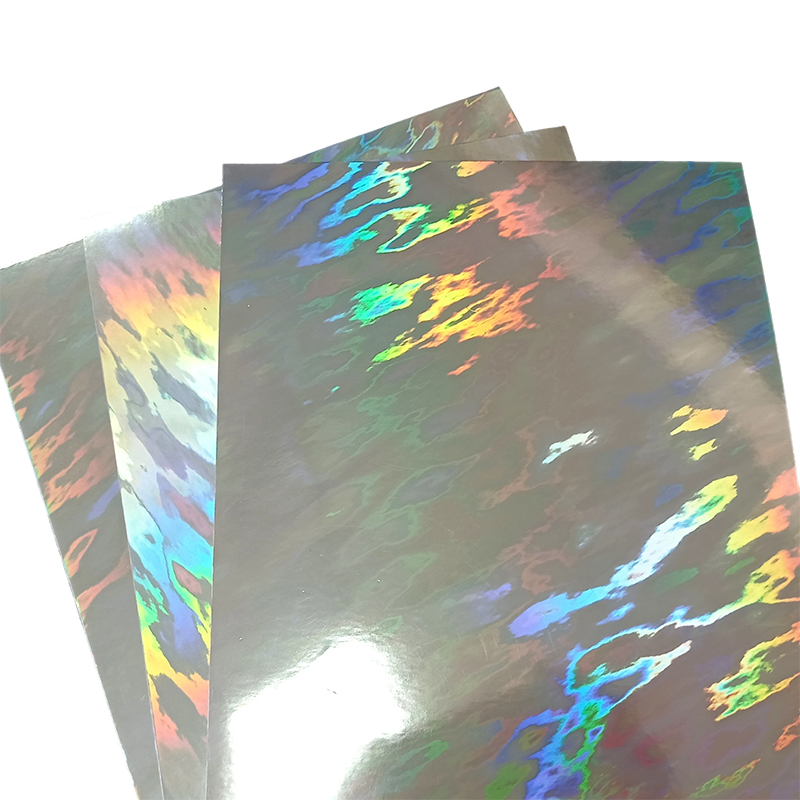
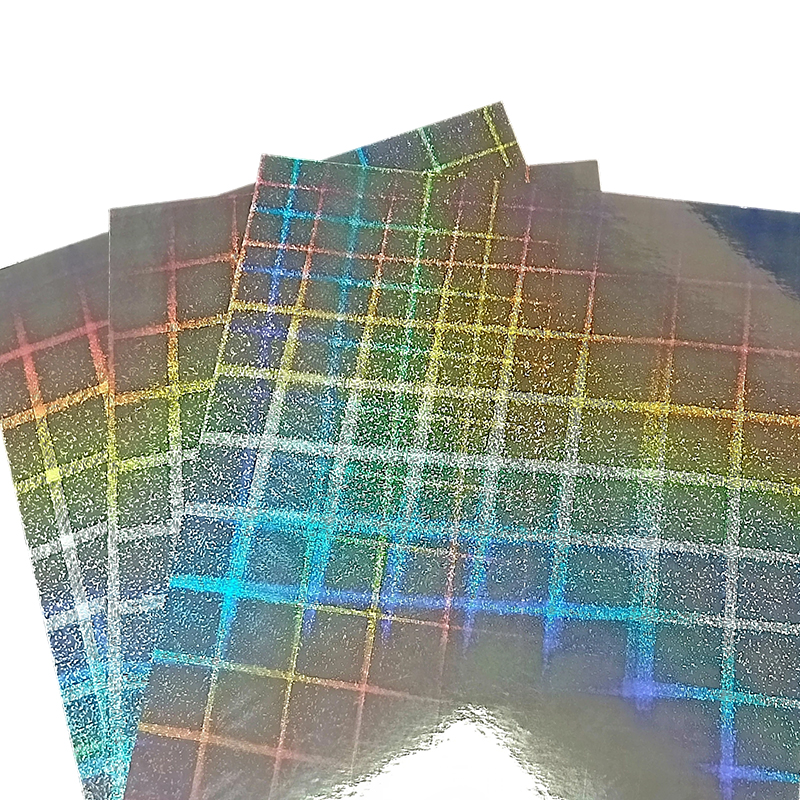
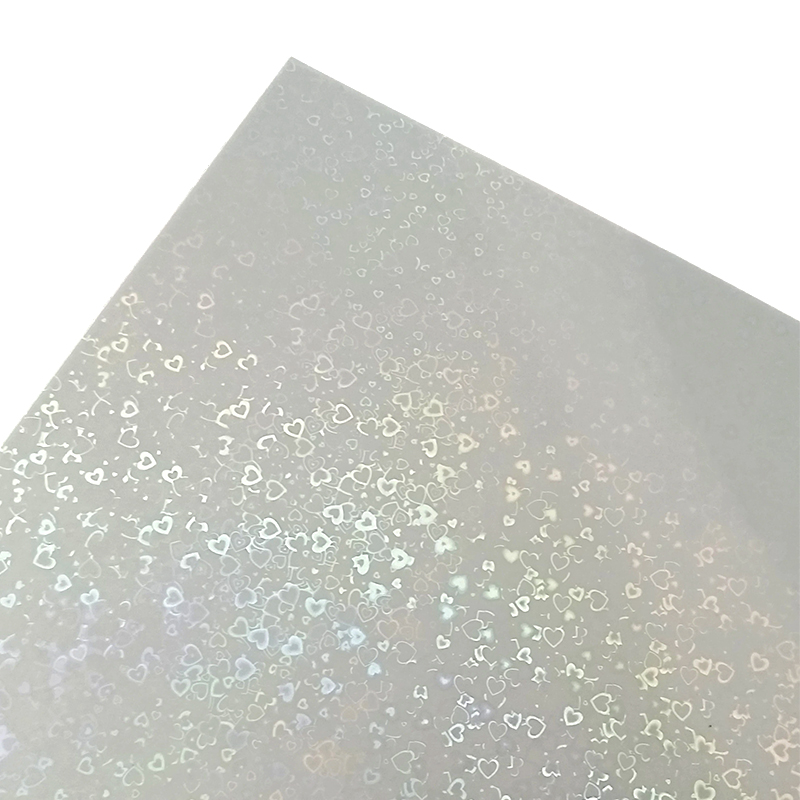
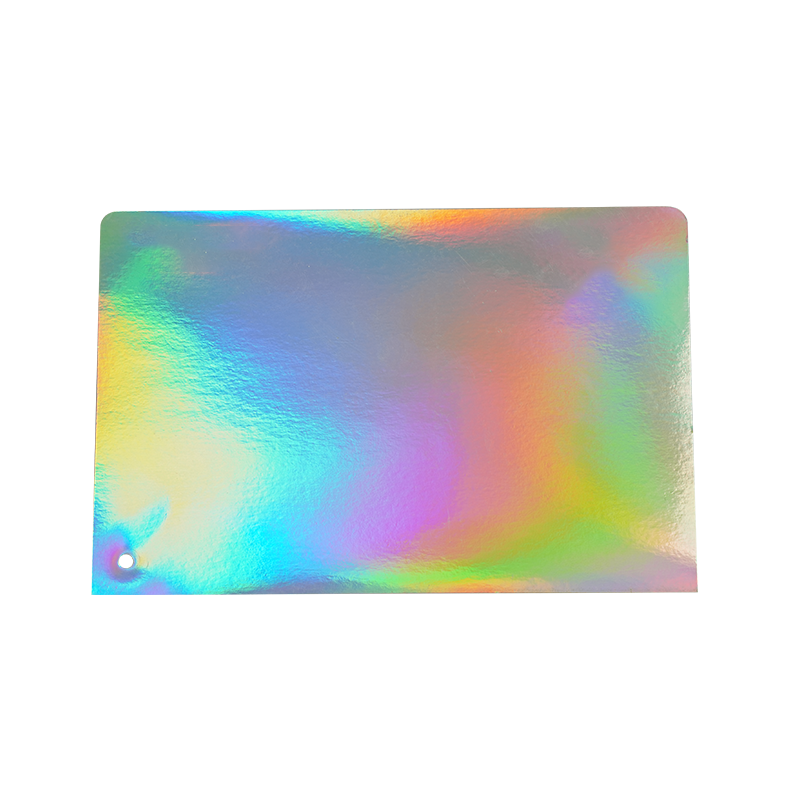
Solid holographic cardstock is a composite sheet material produced by laminating a plain PET laser film onto a base paper substrate — coated paper, white cardstock, or other specified paper types. The result is a rigid, printable sheet with a continuous holographic surface across the entire face, as opposed to spot or patch holographic effects that cover only part of the substrate. The "solid" designation refers to full-face coverage: the holographic layer is present across the complete sheet area with no uncoated zones.
The lamination process bonds the PET laser film to the base paper using a composite adhesive, and a water-based varnish is applied over the holographic surface to protect the laser film layer and provide a printable or sealable top surface. The optical effect — the rainbow light diffraction pattern that defines holographic material — is generated by the microscopic embossed grating structure in the PET film, which diffracts incident light into its spectral components across the viewing angle.
Unlike foil-stamped holographic finishes applied selectively after printing, solid holographic cardstock is supplied as a ready-laminated sheet. The holographic surface is the starting point of the production process rather than a finishing step, which makes it suitable for full-sheet holographic packaging and print applications where coverage requirements would make selective foiling impractical or prohibitively expensive.
Raw Material Components and Their Role in Final Sheet Performance
The performance characteristics of finished solid holographic cardstock — optical quality, surface smoothness, stiffness, printability, and converting behaviour — are determined by the interaction of four material components: the base paper, the PET laser film, the composite adhesive, and the water-based varnish.
Base Paper
The base paper provides the structural foundation of the composite sheet. Its grammage (gsm), surface smoothness, moisture content, and caliper directly influence the stiffness, flatness, and converting characteristics of the finished laminated sheet. Two base paper categories are standard:
- Coated paper: Available at 128g, 157g, and 200g. Coated paper substrates are used for lighter-weight holographic sheet applications — labels, inserts, lightweight folding carton liners, and promotional print pieces where flexibility and lower caliper are appropriate. The mineral coating on coated paper provides a smooth, dimensionally stable surface that bonds well with the PET film adhesive layer.
- White cardstock: Available at 210g, 250g, 300g, 325g, 350g, and 400g. White cardstock substrates provide the rigidity and caliper required for packaging applications — folding cartons, gift boxes, cosmetic packaging, rigid lid structures, and product sleeves. The higher grammage range allows specification to be matched precisely to structural requirements: 210–250g for lighter folding applications, 300–350g for standard folding carton work, 400g for premium rigid or heavyweight applications.
Plain PET Laser Film
The PET (polyethylene terephthalate) laser film carries the holographic embossed pattern. "Plain" in this context refers to the holographic pattern type — a uniform, non-registered diffraction grating that produces a consistent rainbow effect across the full sheet surface, as opposed to custom-patterned films with specific imagery or logo structures embedded in the emboss. PET is selected as the film carrier because of its dimensional stability, transparency, high tensile strength, and resistance to the heat and pressure of the lamination process.
Composite Adhesive
The adhesive layer bonds the PET film to the base paper surface and is critical to the long-term performance of the laminated sheet. Adhesive bond strength directly determines resistance to delamination under the stresses of die-cutting, creasing, folding, and downstream converting operations. For holographic cardstock, the adhesive must maintain bond integrity across the temperature and humidity range the finished product will encounter in use — particularly important for packaging applications where products may be stored in refrigerated or high-humidity environments.
Water-Based Varnish
The top varnish layer applied over the PET film serves two functions: it protects the holographic surface from abrasion and handling damage, and it provides a surface receptive to printing inks and adhesives. Water-based varnish is preferred over solvent-based alternatives in modern production for environmental compliance reasons and because it produces lower VOC emissions during application. The varnish coating also influences the surface gloss and tactile feel of the finished sheet.
Grammage Selection: Matching Weight to Application
Selecting the correct grammage is the most consequential specification decision for solid holographic cardstock, as it determines stiffness, convertibility, and suitability for the intended end use. The laminated composite sheet will have a slightly higher effective grammage than the base paper alone due to the added weight of the PET film, adhesive, and varnish layers — typically an addition of 20–35 gsm over the base paper grammage.
| Base Paper | Base Grammage | Typical Application Range | Converting Suitability |
|---|---|---|---|
| Coated paper | 128g | Labels, inserts, flexible wrap | Die-cutting, laminating |
| Coated paper | 157g | Promotional print, lightweight sleeves | Die-cutting, folding, offset print |
| Coated paper | 200g | Light folding carton liners, card | Creasing, folding, die-cutting |
| White cardstock | 210g / 250g | Folding cartons, hang tags, gift cards | Creasing, folding, gluing, die-cutting |
| White cardstock | 300g / 325g | Cosmetic cartons, retail packaging | Standard folding carton converting |
| White cardstock | 350g / 400g | Premium rigid structures, gift boxes | Die-cutting; crease with care at 400g |
At the upper end of the grammage range — 350g and 400g white cardstock — crease performance requires attention. Heavier boards require deeper, more precisely controlled crease channels to fold cleanly without cracking the holographic laminate surface at the fold line. Specifying the correct crease rule depth and matrix clearance for the board thickness is essential to avoid delamination or surface cracking at fold points in finished packaging.
Printing on Solid Holographic Cardstock
The printability of solid holographic cardstock is significantly different from standard coated board, and understanding these differences is essential for achieving intended print results without production problems.
Ink Adhesion and Surface Energy
The water-based varnish applied over the PET film provides a printable surface, but the surface energy of this layer is lower than that of standard coated paper. UV-curable inks are the preferred printing system for holographic cardstock because UV inks cure by photopolymerisation rather than absorption, making them less dependent on the surface absorbency characteristics that affect conventional oil-based offset inks. UV offset and UV digital printing systems consistently produce better ink adhesion, sharper dot reproduction, and more vibrant colour on holographic substrates than conventional ink systems.
Colour Appearance Over Holographic Backgrounds
The holographic surface modifies the visual appearance of printed colours in ways that require adjustment to standard colour separations. The reflective, light-diffracting background increases perceived lightness under most ink layers, which can cause process colour reproduction to appear lighter and less saturated than the same separation printed on white coated board. Compensating by increasing ink density or adjusting separation curves is common practice. White ink as an intermediate layer between the holographic surface and process colour printing is used where accurate colour reproduction is critical — the white ground provides a neutral base that isolates the printed colour from the holographic background effect.
Reverse-Out and Window Designs
One of the distinctive design approaches for solid holographic cardstock is using the holographic surface itself as a design element — printing solid colour areas and leaving unprinted "windows" where the holographic effect shows through. This technique creates a contrast between matte or gloss printed zones and the dynamic holographic areas, producing visual complexity that is difficult to replicate with post-print finishing. Designs that deliberately incorporate holographic windows typically avoid the white underlayer in those areas and manage ink coverage to prevent ink spread into the holographic zones during printing.
Converting Operations: Die-Cutting, Creasing, Folding, and Gluing
Solid holographic cardstock converts on standard packaging converting equipment, but the PET film laminate layer introduces specific considerations that affect tooling selection and process parameters.
Die-Cutting
The PET film layer requires sharper cutting rules than unlaminated board of equivalent grammage. Dull or worn cutting rules tend to drag the PET film rather than cutting cleanly through it, producing edge delamination — the film separating from the base paper at the cut edge. Rule hardness specification should be increased for holographic laminate versus standard board, and rule sharpness should be checked more frequently during long production runs. Rotary die-cutting with matched steel rules generally produces cleaner edges on laminated holographic stock than flatbed die-cutting at equivalent cutting force settings.
Creasing and Folding
Fold lines must be creased before folding on all holographic cardstock weights above 200g. The PET laminate reduces the natural fold compliance of the base board, and attempting to fold without pre-creasing will crack the holographic surface. Crease channel width and depth should be set to accommodate the total laminated caliper rather than the base paper caliper alone. Folding should be performed with the holographic surface on the outside of the fold wherever structurally possible — folding with the laminate surface on the inside compresses the film layer and can produce surface distortion or delamination at the crease apex.
Gluing
Hot-melt and cold PVA adhesives both bond reliably to the base paper side of holographic cardstock. Gluing to the holographic varnish surface requires adhesive selection testing, as the low surface energy of the PET varnish layer reduces bond strength for some adhesive formulations. Where glue tabs or end flaps will contact the holographic face, requesting adhesion test results from the material supplier before committing to a production run is advisable. UV-curable adhesives and certain pressure-sensitive formulations specifically engineered for low-surface-energy substrates offer more reliable bonding to the holographic face than standard packaging adhesives.
Typical End-Use Applications by Sector
Solid holographic cardstock is used across a range of consumer and commercial markets where visual differentiation, premium perception, or anti-counterfeiting functionality are primary packaging objectives.
- Cosmetics and personal care: Folding cartons for perfume, skincare serums, and colour cosmetics — sectors where shelf presence and premium visual cues directly influence purchase decisions at the point of sale. The 250g–350g white cardstock range is most commonly specified for standard cosmetic folding carton formats.
- Gift and luxury retail packaging: Gift boxes, shopping bags, ribbon-tied cartons, and product sleeves for jewellery, accessories, and confectionery. The full-face holographic surface creates a premium unboxing experience without requiring additional foiling or lamination treatments in the converting process.
- Trading cards and collectibles: Holographic cardstock is used as a substrate for premium trading cards, game cards, and collectible print items. The 300g–350g weight range provides the rigidity and feel expected in the collectibles market.
- Promotional and seasonal print: Event invitations, greeting cards, promotional mailers, and seasonal packaging where a high visual impact is required for a limited production run. The lighter coated paper grades (128g–157g) are commonly used for these applications where flexibility and lower unit cost are priorities.
- Food packaging: Confectionery boxes, chocolate packaging, and premium food gift sets. Food-contact compliance of the specific laminate construction should be confirmed with the material supplier for any application where the holographic surface will be in direct or indirect contact with food products.
- Security and brand protection: The holographic surface provides a first-level visual security feature that is difficult to replicate with standard printing. While plain PET laser film does not provide the same level of authentication as custom-embossed security holograms, the full-face holographic surface serves as a visible differentiation marker that deters low-cost counterfeiting of branded packaging.
Specifying Custom Grammages and Non-Standard Configurations
Standard grammage offerings cover the majority of folding carton and label applications, but projects with atypical structural or aesthetic requirements may need configurations outside the standard range. Custom grammages, alternative base paper types, and non-standard sheet sizes are available on an inquiry and pre-order basis, subject to minimum order quantity requirements that reflect the economics of custom lamination runs.
When specifying a custom configuration, the following information enables accurate quotation and technical assessment:
- Target finished sheet grammage or caliper: If working from a structural specification rather than a base paper grammage, providing the target finished caliper in microns allows the laminator to select the appropriate base paper and film combination to achieve it.
- Sheet size and format: Finished sheet dimensions, or the press sheet size if the material will be sheeted for offset printing. Grain direction relative to the sheet long edge should be specified for folding carton applications — grain parallel to the fold direction is standard practice for board carton work.
- Intended printing process: UV offset, conventional offset, digital, screen, or flexographic — the printing system influences varnish specification and surface energy requirements of the finished sheet.
- Converting operations: Whether the sheet will be die-cut, creased, folded, glued, or embossed downstream, and whether any of these operations will contact the holographic surface directly.
- Volume and delivery schedule: Custom lamination is produced in dedicated runs; lead times for non-standard configurations are typically longer than for standard grammage stock items, and minimum order quantities generally start at 500–1,000 sheets or equivalent linear metres depending on the format.