English
  Español
  عربى
عربى 

Industry News
Content
- 1 What Is Silver Holographic Cardstock?
- 2 How the Holographic Effect Is Produced
- 3 Applications Across Industries and Creative Uses
- 4 Printability and Compatibility Considerations
- 5 Comparing Silver Holographic Cardstock to Related Materials
- 6 Cutting, Scoring, and Handling Tips
- 7 What to Look for When Buying Silver Holographic Cardstock
What Is Silver Holographic Cardstock?
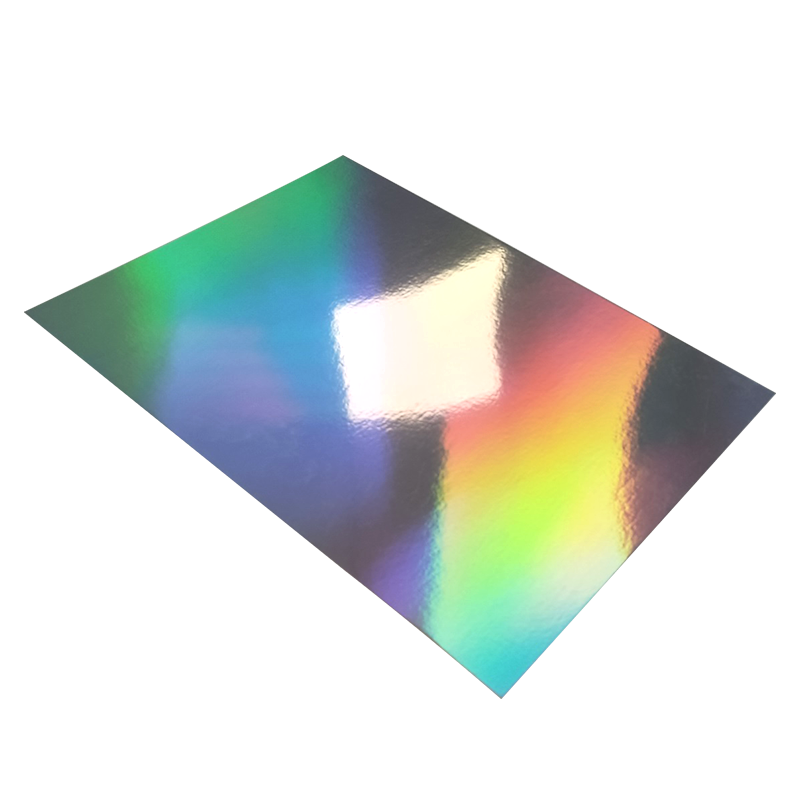
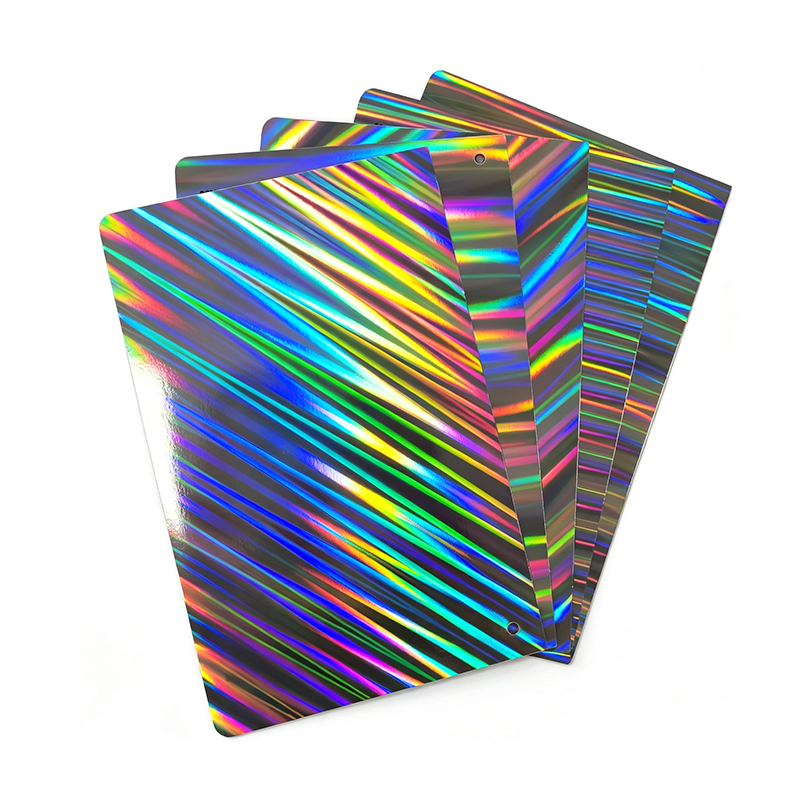
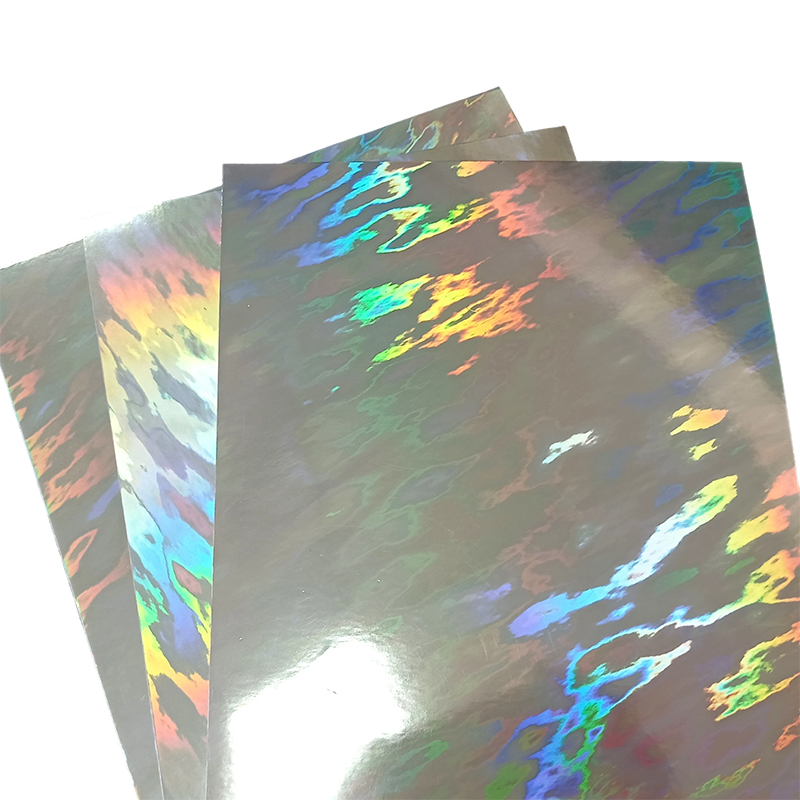
Silver holographic cardstock is a heavyweight paper substrate with a metallic silver surface that has been embossed or coated with a diffraction grating pattern, producing a shifting, rainbow-like visual effect when viewed under light. Unlike standard silver metallic cardstock — which reflects light as a uniform mirror finish — holographic cardstock breaks incident light into its spectral components across a microscopic surface structure, creating the characteristic prismatic shimmer that varies with viewing angle and light source.
The material is available in two primary constructions. In the first, a thin holographic film or foil layer is laminated to a paper or card core, giving the substrate the structural rigidity of cardstock with the optical performance of holographic film. In the second, a holographic coating is applied directly to a metallic base paper. The laminated construction is more common in craft and commercial printing applications, offering better dimensional stability and compatibility with cutting equipment.
Standard weights for silver holographic cardstock range from 250 gsm to 350 gsm, placing it in the cardstock category by paper industry classification. Lighter holographic papers (80–160 gsm) are available but lack the rigidity needed for most structural applications such as box construction, gift tags, and invitations.
How the Holographic Effect Is Produced
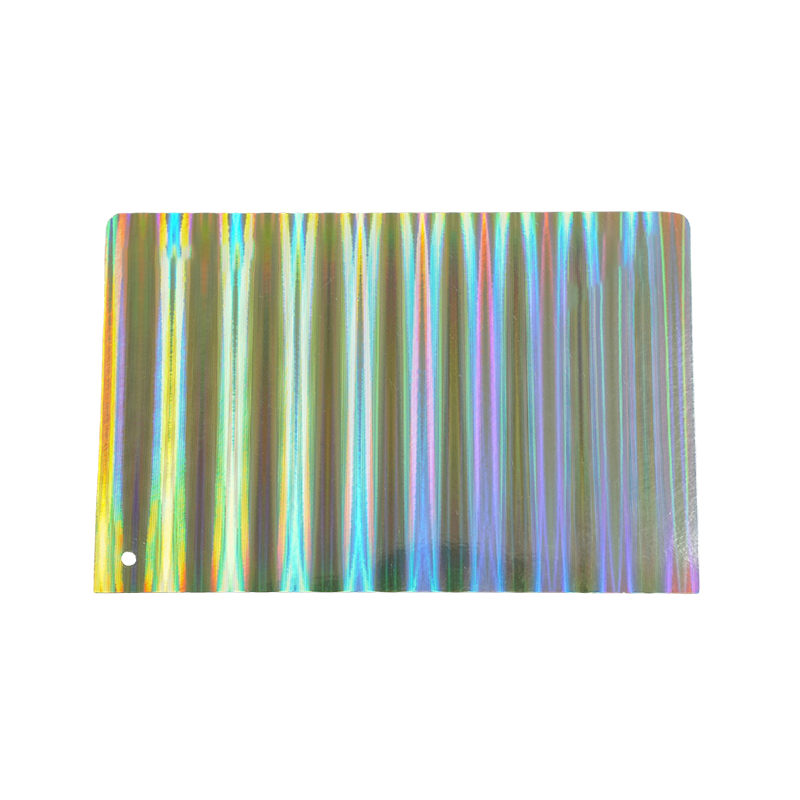
The visual effect in holographic cardstock originates from a surface microstructure — a pattern of microscopic ridges and grooves, typically spaced 400 to 700 nanometers apart — that functions as a diffraction grating. When white light strikes this surface, different wavelengths of the visible spectrum reflect at different angles, separating the light into its component colors and generating the characteristic spectrum shift as the viewing angle changes.
This microstructure is created through an embossing process in which a nickel shim — engraved with the diffraction pattern using laser or electron beam lithography — is pressed into a thermoplastic coating under heat and pressure. The silver metallic base layer beneath the embossed surface acts as a reflective backing, amplifying the spectral separation and giving the material its bright, mirror-like base tone alongside the color play.
The specific pattern embossed determines the visual character of the material. Patterns range from fine rainbow (producing a smooth, continuous color cycle), to coarser geometric or prismatic designs that create distinct angular facets of color. Silver holographic cardstock with a fine rainbow pattern is the most commercially prevalent, as it provides broad visual appeal and photographs well for product and packaging applications.
Applications Across Industries and Creative Uses
Silver holographic cardstock is used wherever a combination of structural rigidity and high-visibility, premium visual finish is required. Its applications span commercial packaging, professional printing, and consumer craft markets.
Packaging and Retail Display
Luxury gift boxes, cosmetic packaging, perfume cartons, and premium confectionery packaging use silver holographic cardstock as a structural or decorative outer layer. The material's shelf-presence effect — drawing attention under retail lighting — makes it a favored choice for seasonal and limited-edition product lines. Holographic packaging has been shown in retail studies to increase perceived product value and dwell time at point of sale compared to standard metallic or matte alternatives.
Invitations, Cards, and Stationery
Wedding invitations, birthday cards, event programs, and celebration stationery represent a major use segment. Silver holographic cardstock is particularly popular for milestone events — milestone birthdays, New Year's, and anniversary celebrations — where the prismatic finish conveys festivity without requiring additional embellishment. It is widely used as a base card for layered invitation designs, where it functions as a backing layer beneath matte or vellum overlays.
Craft and DIY Projects
The consumer craft market drives significant volume of silver holographic cardstock through scrapbooking, card making, paper crafting, and die-cutting applications. The material is compatible with most consumer die-cutting machines including Cricut and Silhouette systems, and cuts cleanly with both digital cutting equipment and steel rule dies. Its popularity in the craft segment has driven a wide availability of retail formats — A4, A3, letter, 12×12 inch sheets, and roll formats.
Gift Wrap and Decorative Tags
Lighter-weight holographic paper in the 80–120 gsm range is used for gift wrap, while heavier cardstock grades are die-cut into gift tags, ribbon pulls, and hang tags. For retail gifting applications, holographic tags eliminate the need for additional decorative finishing such as foil stamping, reducing per-unit production cost while maintaining a high-end appearance.
Event Décor and Display
Silver holographic cardstock is used to construct backdrops, centerpiece elements, table runners, balloon tassels, and photo booth props. Its high reflectivity makes it particularly effective in event photography and videography contexts, where it generates visual interest without the harsh hotspot reflections associated with plain mirror-finish metallics.
Printability and Compatibility Considerations
Printing on silver holographic cardstock presents specific challenges that differ from printing on standard paper or even plain metallic cardstock. The surface coating that creates the holographic effect is non-porous and highly hydrophobic, which significantly affects ink adhesion and drying behavior.
- Inkjet printing: Standard aqueous inkjet inks do not adhere reliably to holographic surfaces. Pigment-based inks perform better than dye-based inks, but smearing and beading remain risks. Some manufacturers produce holographic cardstock with an inkjet-receptive topcoat — these should be specified explicitly when inkjet printability is required.
- Laser printing: Most silver holographic cardstock is not suitable for laser printing. The heat generated in a laser printer's fuser unit — typically 150°C to 200°C — can melt, delaminate, or distort the holographic film layer. Attempting to laser print on holographic cardstock can also damage the printer fuser roller. Manufacturers that produce laser-compatible holographic stocks use heat-stable film constructions and should be verified before use.
- Offset and digital commercial printing: UV-curable offset inks and dry toner digital presses (with appropriate sheet feeding adaptations) can print on holographic cardstock with acceptable adhesion. UV flexographic printing is the dominant commercial process for pre-printed holographic packaging.
- Foil stamping and embossing: Silver holographic cardstock accepts hot foil stamping and blind embossing well. Gold or colored foil over a holographic base creates a layered visual effect widely used in luxury packaging and premium stationery.
- Adhesives: Standard water-based adhesives may not bond reliably to the holographic surface. Solvent-based or hot melt adhesives provide stronger bonds. For craft applications, double-sided adhesive tape or glue dots are generally more reliable than liquid glue on the holographic face.
Comparing Silver Holographic Cardstock to Related Materials
| Material | Visual Effect | Printability | Best For |
|---|---|---|---|
| Silver holographic cardstock | Prismatic rainbow shimmer on silver base | Limited; UV offset best | Packaging, event décor, invitations, craft |
| Silver metallic cardstock | Uniform mirror or brushed silver | Good with pigment inkjet; laser varies | Business cards, stationery, labels |
| Glitter cardstock | Sparkling particle texture | Not recommended | Craft, decorative cutting, displays |
| Foil-stamped cardstock | Spot metallic or holographic areas | Good on non-foil areas | Premium invitations, business cards |
| Iridescent / pearlescent cardstock | Soft color-shift, no sharp spectrum | Good with most inkjet and laser | Elegant stationery, wedding suites |
Cutting, Scoring, and Handling Tips
Silver holographic cardstock cuts cleanly with sharp blades but has handling characteristics that differ from standard paper stock. The laminated film surface can show scratches and fingerprints more readily than matte stocks, and the card core may delaminate at fold lines if scoring is insufficient.
- Die cutting: Compatible with steel rule dies and most digital cutting machines. Blade depth should be calibrated carefully — the film layer is harder than paper, and insufficient pressure produces incomplete cuts, while excessive depth can cause the holographic surface to crack or peel along the cut edge.
- Scoring before folding: Always score before folding on any weight above 250 gsm. Folding without scoring causes the holographic film to crack at the fold line, producing a visible white or silver fracture. A bone folder and scoring tool or a dedicated scoring blade setting on digital cutters produces the cleanest result.
- Fingerprint management: Handle sheets from the edges or with cotton gloves during finishing. The holographic surface shows oils from skin contact readily, and marks may not be fully removable without dulling the surface sheen.
- Storage: Store flat or rolled with the holographic face inward to prevent surface abrasion. Avoid storing under pressure from other materials, as the embossed microstructure can be flattened by sustained contact pressure, diminishing the optical effect.
What to Look for When Buying Silver Holographic Cardstock
Quality varies considerably across suppliers, and the holographic effect in particular does not photograph consistently — meaning product images give an incomplete picture of actual visual performance. Key specification criteria to evaluate before purchasing include:
- Film construction vs. coated paper: Film-laminated constructions are generally more durable and produce a sharper, brighter holographic effect. Coated paper constructions are typically less expensive but may show surface wear more quickly in packaging applications.
- Pattern type: Fine rainbow patterns are most versatile. Geometric or laser patterns (stars, diamonds, grid arrays) offer a distinct look but limit application scope.
- Caliper consistency: Uneven thickness causes feeding problems in cutting equipment and inconsistent fold depth. Reputable suppliers provide caliper tolerances; a ±5% basis weight tolerance is standard for quality grades.
- Sheet size options: For commercial use, availability in standard press sheet sizes (SRA3, 450×640 mm) is important. Craft users should confirm whether retail packs are cut accurately to stated dimensions, as dimensional inconsistency is a common quality issue at the lower price end of the market.
- Quantity and format: Available in single sheets, packs of 10–50, and case quantities for commercial buyers. Roll formats are available for packaging and wide-format cutting applications.