English
 Español
 عربى
Home / News / Industry News / Stars Holographic Cardstock: How Spatial Light Effects Boost Skincare and Toy Sales
Industry News


Content
A package used to have two jobs: protect the product and carry a name. The most effective packaging now does more, it creates a moment. Stars holographic cardstock achieves this by turning a flat surface into a shifting field of light. In skincare counters and toy aisles, where shoppers decide in seconds, these spatial light effects do not just decorate a box. They change how the product inside is perceived, valued, and remembered.
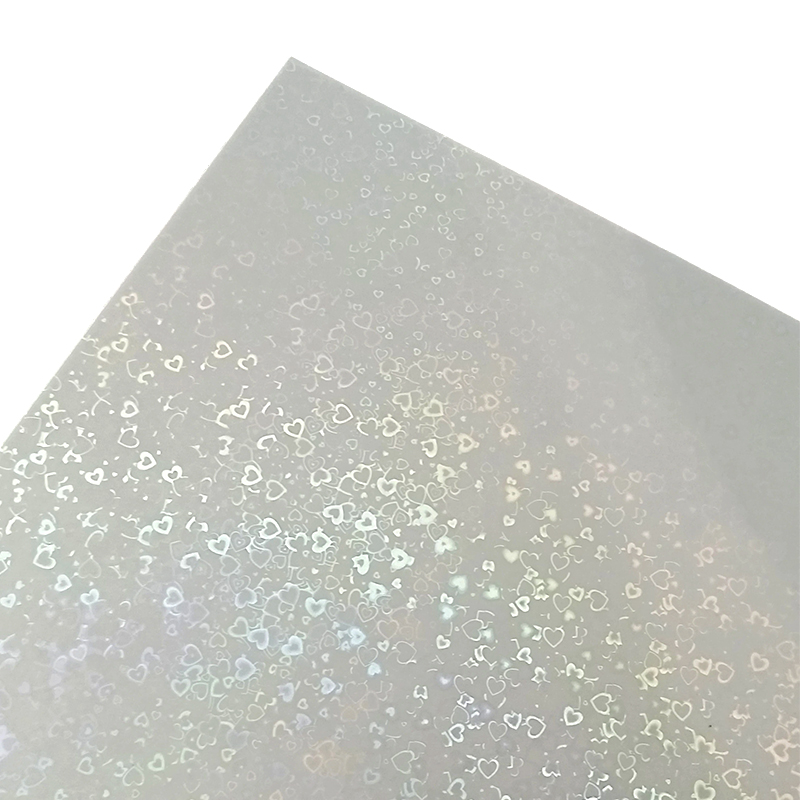
Stars holographic cardstock is a decorative packaging material with a holographic coating or laminated film embossed with a repeating star pattern. It belongs to the broader family of holographic cardstock, in which microscopic diffraction gratings split white light into spectral colors. As the viewing angle changes, reflected highlights move across the surface, creating a spatial light effect that feels layered and almost three-dimensional.
What makes a star pattern special is the way it concentrates light. Instead of producing one uniform rainbow, a star motif breaks the surface into points, rays, and sparkling nodes. The eye reads these highlights as separate from the paper itself, which gives the box depth, movement, and controlled brightness. A star holographic box behaves differently from a flat metallic or plain holographic box: the light appears to live inside the package, not just on it.
The material is typically built on a card base, sometimes laminated with an OPP or PET film for gloss and durability, and then embossed or cast-coated with the holographic pattern. Depending on the packaging format, the paper weight can range from 30 to 450 gsm.
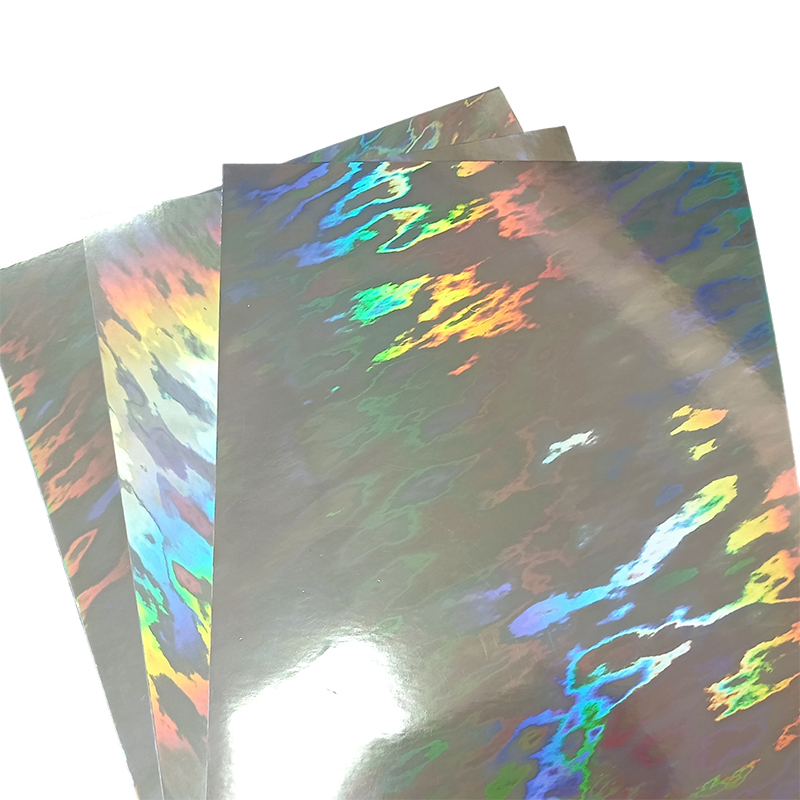
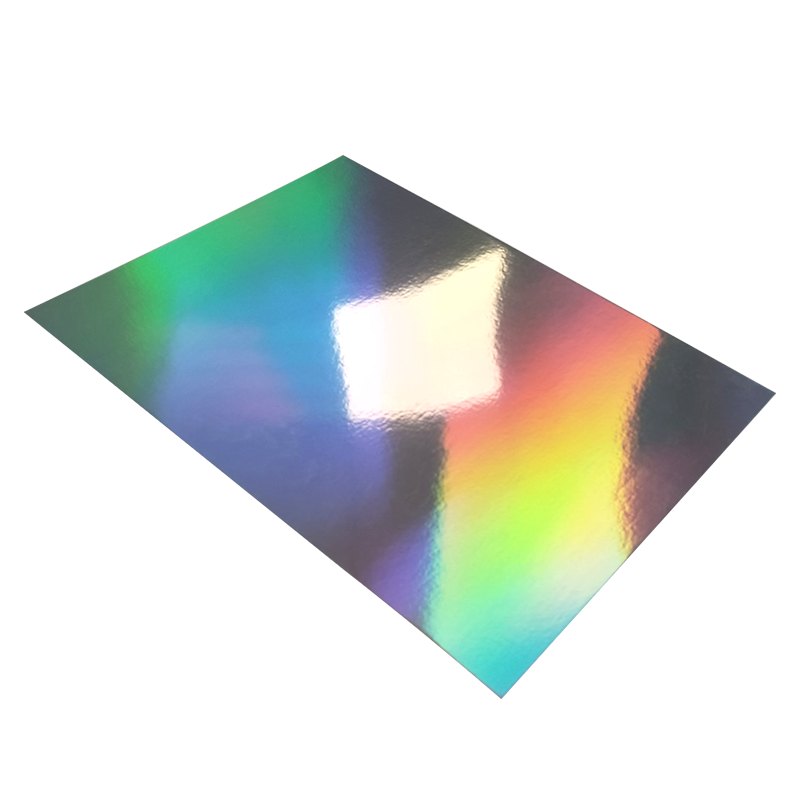 Solid Holographic Cardstock with Mirror-Like Star PatternThis PET-based cardstock offers a smooth, reflective surface that amplifies holographic star effects under low light. It suits packaging needing durable, dimensionally stable material with vibrant optical appeal.View Product →
A solid holographic base gives the star pattern a clean, mirror-like canvas. It reflects more light than a brushed or matte surface, so the spatial effect remains visible even under weak retail lighting. For brands that want maximum shimmer, this type of substrate is the strongest starting point.
Human vision is wired to notice movement. In a busy retail environment, most packaging is static, and shoppers filter out most of it. Holographic surfaces betray movement at the periphery of vision: a tiny shift in the customer's head angle changes the reflection, and the eye is pulled back toward the box. This effect, often called the stop effect, is the first reason spatial light drives sales.
Beyond attention, moving light carries emotional meaning. Gold, silver, crystals, and stars are cultural symbols of rarity and aspiration. When a package uses star holographic cardstock, it borrows that visual vocabulary. The consumer does not consciously think about diffraction gratings; they feel that the product is premium, dreamy, or special.
Spatial light effects also make products photogenic. Unboxing videos and social media photos often show holographic boxes at an angle, with highlights that change from frame to frame. This gives brands free marketing: customers become content creators because the package itself is worth showing.
In skincare, shoppers rarely have the chemical knowledge to judge a product by its ingredient list alone. Instead, they use visual shortcuts: bottle shape, label design, and the tactile quality of the box. A star holographic box signals that the product inside is no ordinary drugstore item. The spatial light effect associates the formula with concepts such as glow, radiance, and visible renewal, which are exactly the benefits a skincare brand promises.
Deep navy backgrounds with silver star holographic details evoke a night sky and feel calm, expensive, and slightly scientific. Smaller, denser stars create a soft, misty shimmer that suits serums and moisturizers; larger, more defined stars work well on gift sets and limited editions. The same material can support multiple brand positions.
The unboxing moment is just as important. A lid that sparkles differently from every angle makes the first seconds of contact feel intentional. Consumers photograph the box, share it, and remember it when they repurchase. For brands exploring material behavior in beauty packaging, our skincare packaging guide explains how the choice of substrate affects printing, structural stiffness, and the final visual impression.
Toy packaging must convince two audiences at once: children who want the fantasy, and parents who pay for it. Stars holographic cardstock works on both levels. Children see a box that looks like something from a storybook or a collectible game, with lights that move as they tilt it. Parents see a product that feels more substantial and thoughtful than a plain printed carton.
The material turns packaging into play value. A box with shifting star highlights can become a spaceship window, a hidden treasure map, or a display base for a collection. Many parents keep a good toy box; holographic cardstock gives them a reason to do so.
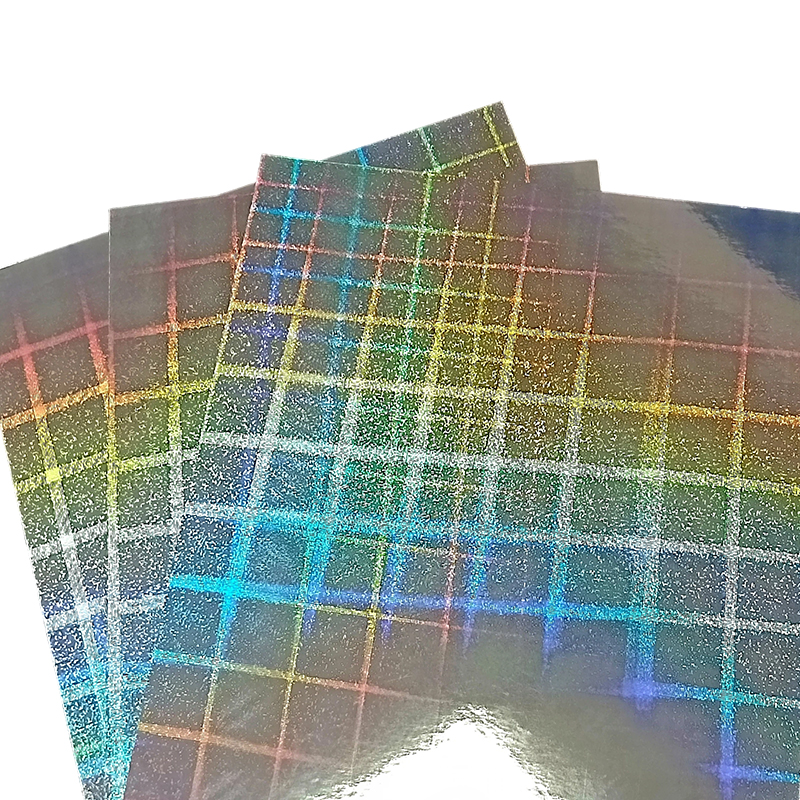
For blind boxes, collectible cards, STEM kits, and jigsaw puzzles, the spatial light effect adds a sense of rarity. It also increases the time a child spends handling the package, which strengthens the connection to the product before it is even opened. Linear holographic patterns, with their clean directional streaks, are an excellent companion to star patterns: the lines guide the eye toward a central focus, while the stars provide the sparkle.
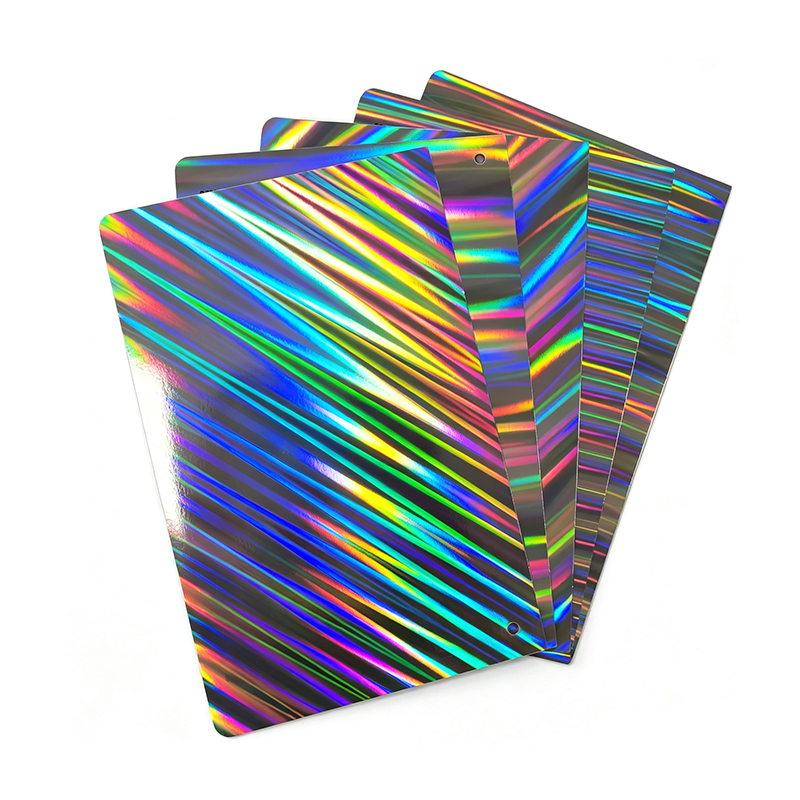 Linear Holographic Cardstock with Directional StreaksFeaturing clean columnar holographic patterns, this cardstock guides the eye and complements star motifs. Ideal for blind boxes and toys, its stable PET base ensures consistent optical effect and printability.View Product →
Choosing the right stars holographic cardstock requires thinking about structure, weight, and print method together. The table below summarizes common specifications used for skincare and toy packaging.
| Basis Weight | Typical Packaging Uses |
|---|---|
| 30 to 80 gsm | Wraps, sleeves, liners, lightweight foldable cartons |
| 80 to 200 gsm | Standard folding cartons, makeup boxes, toy mailer boxes |
| 200 to 450 gsm | Rigid box lids, book-style boxes, luxury gift sets |
| Base Option | Key Characteristic |
| Paper base | Recyclable and flexible for die-cutting and creasing |
| OPP laminated | Higher gloss, water resistance, better surface smoothness for printing |
| PET based | Strong dimensional stability for complex structures |
| Printing Method | Best For |
| UV offset printing | Fine text, gradients, and consistent color on coated surfaces |
| Screen printing | Thick opaque layers, white underprints, and resilient brand marks |
| Gravure printing | Long production runs with high speed and color consistency |
When printing on holographic surfaces, leave some areas free of ink so the spatial light effect can breathe. A common technique is to print a white or black barrier layer only where text and images must be highly readable, and to leave large background areas open to the star pattern. UV inks are recommended because they cure quickly and hold sharp detail. For a quick reference on how solid and linear holographic patterns compare, see our detailed comparison guide.
Not all star patterns work in all contexts. A pattern full of large stars can overwhelm a small serum carton, while an ultra-fine star field may disappear on a large shelf presentation box. That is why customization matters as much as the material itself.
Brands can choose the size of the stars, the distance between them, whether they appear as outlines or filled stars, and whether the background is glossy, silver, gold, or tinted through the base paper. Mixed patterns create visual rhythm, such as a few large stars surrounded by a field of micro dots. Sparse stars on a deep background feel mysterious and premium; dense micro stars make the surface look dusted with light.
Customized patterns can also embed brand elements, including monograms, custom symbols, or a signature star shape that becomes part of the packaging identity. A custom embossing roller or laser-engraved casting mold is required, which is why it is best to work with a supplier that can produce and approve samples before mass production.
 Customized Holographic Paper for Branded DesignsTailored holographic films allow for unique textures, logos, or signature star shapes that strengthen brand identity. The high-grammage substrate supports die-cutting and finishing, making it suitable for premium packaging.View Product →
When evaluating a supplier, ask for a light test rather than relying only on printed brochures. Place the sample under retail spotlights, warm shop lighting, and daylight, and rotate it slowly. The spatial light effect should feel continuous, with no dead bands or patchy rainbow areas.
Buying holographic cardstock is a specification business. A beautiful sample is meaningless if the production batch is visibly different, or if the paper base jams in the customer's die-cutter. Look for a supplier that can show evidence of stable production and printing compatibility.
Ask these questions before ordering:
Also confirm the supplier can handle both paper-based and film-laminated constructions. Some orders need an environmental profile, while others need extra durability. A supplier with both capabilities reduces the risk of having to switch materials when a project changes.
Ordinary holographic cardstock creates a continuous rainbow shimmer across the entire surface. Stars holographic cardstock uses a specific embossed pattern that concentrates light into star shapes, producing distinct highlights and a more spatial, dimensional effect.
Yes. UV offset, screen, and gravure printing work well, especially with a white underprint. For best results, leave unprinted areas so the star effect remains visible and the text stays readable.
It is widely used in cosmetics, gifts, and toys. For specific regulatory requirements, select a paper or film base with the appropriate safety certificates, and always validate the full laminated structure with your print partner.
Yes. Suppliers can adjust star size, density, layout, and even integrate a custom brand symbol. Custom patterns are produced with a dedicated embossing tool and typically require sample approval before series production.
Stars holographic cardstock sits at the intersection of material science and consumer psychology. Its spatial light effects give a box the ability to catch the eye, raise perceived value, and spark a small moment of wonder before the product is even opened. For skincare and toy brands, that moment is often the difference between being picked up and being passed over.
Light behaves differently in every environment, so do not choose a material from a photo on a screen. Order physical samples of paper-based and film-laminated star holographic cards, test them under your own retail lighting, and watch how customers handle the box. The right spatial light effect will sell the product before a single word on the label is read.