English
 Español
 عربى
Home / News / Industry News / Temperature and Heat Resistance Limits of Aluminum Foil Cardboard for UV Curing
Industry News


Content
UV curing is a widely used process in packaging printing, offering fast drying and durable finishes. However, not every material can tolerate the heat generated during curing. For aluminum foil cardboard, understanding its temperature and heat resistance limits is essential to avoid delamination, blistering, or discoloration. This guide breaks down the actual thermal limits, the factors that influence them, and how to choose a product that performs reliably.
Aluminum foil cardboard is a composite material consisting of a thin aluminum foil layer bonded to a paperboard base. The foil provides a metallic appearance, barrier properties, and a smooth surface for printing. The paperboard adds stiffness and structural strength, making it suitable for cosmetic boxes, gift packaging, wine boxes, and similar high-end applications.
Typical constructions use aluminum foil ranging from 6 to 30 microns in thickness, while the board weight can vary from 200 to 450 gsm. The bonding layer is usually a water-based or hot-melt adhesive that holds the foil and board together. Each component has its own thermal behavior, and the overall heat resistance depends on the weakest link in the structure.
For a deeper look at the common variants, see this guide to aluminum foil cardboard types and properties.
UV curing uses intense ultraviolet light to polymerize inks and coatings. In a typical UV system, the substrate passes under mercury arc lamps or LED UV arrays. Mercury lamps emit significant infrared radiation, which can raise the surface temperature of the material by 60°C to 120°C, depending on the wattage and exposure time. LED UV lamps are cooler but still generate some heat, especially in multi-lamp setups.
When aluminum foil cardboard is exposed to these temperatures, a few things can happen. First, the adhesive layer may soften, reducing the bond between the foil and the board. Second, the paperboard can lose moisture, causing curl or shrinkage. Third, extreme heat may char or scorch the board, leading to visible brown marks and odor.
Therefore, knowing the temperature limits of your foil cardboard is not just a technical detail; it directly affects production yield and package quality.
Aluminum foil cardboard cannot be treated like a pure metal sheet. The metal foil itself is relatively heat resistant, but the composite structure introduces the limitations of paper and adhesive. Based on industry practice and available material data, the safe operating range for most aluminum foil cardboard is as follows:
| Temperature Range | Expected Behavior |
|---|---|
| Below 80°C | Continuous safe operation; no structural or visual changes. |
| 80°C – 120°C | Short-term exposure (minutes) is safe; prolonged exposure may soften adhesives. |
| 120°C – 150°C | Acceptable only for brief peaks (under 30 seconds to a few minutes) in UV curing. |
| Above 150°C | High risk of delamination, blistering, paper scorching, and discoloration. |
A general rule is to keep the material below 120°C during UV curing. Some engineered products with high-temperature adhesives can tolerate short spikes up to 150°C without visible damage. Always verify the exact specification with your material supplier.
Key Limit: Keep aluminum foil cardboard below 120°C for continuous UV curing. Short spikes above this temperature may cause adhesive failure.
The thermal performance of aluminum foil cardboard is not a fixed number. Several variables determine how much heat a specific batch can withstand:
Water-based adhesives generally have lower softening points (around 80°C–100°C), while hot-melt polyurethane adhesives can handle up to 150°C or more. The adhesive is often the first component to fail under heat.
Higher-grammage boards are denser and tend to conduct heat more slowly, offering better short-term insulation. Coated boards with a clay or pigment layer may also resist scorching better than uncoated ones.
Thicker aluminum foil acts as a heat spreader, distributing incoming heat across a larger area. This can reduce localized hotspots but may also accelerate heat transfer to the adhesive unless the board is thick enough.
A UV varnish or acrylic coating over the foil can add a protective layer that blocks some infrared radiation and reduces direct foil exposure to heat.
To avoid heat-related failures, consider these points before production:
At Shanghai Piaodehua Adhesive Products Co., Ltd., we produce aluminum foil cardboard specifically engineered for demanding printing workflows, including UV offset, UV coating, and silk-screen printing. Our gold and silver foilbacked cardboards are designed to maintain bond integrity and dimensional stability during curing.
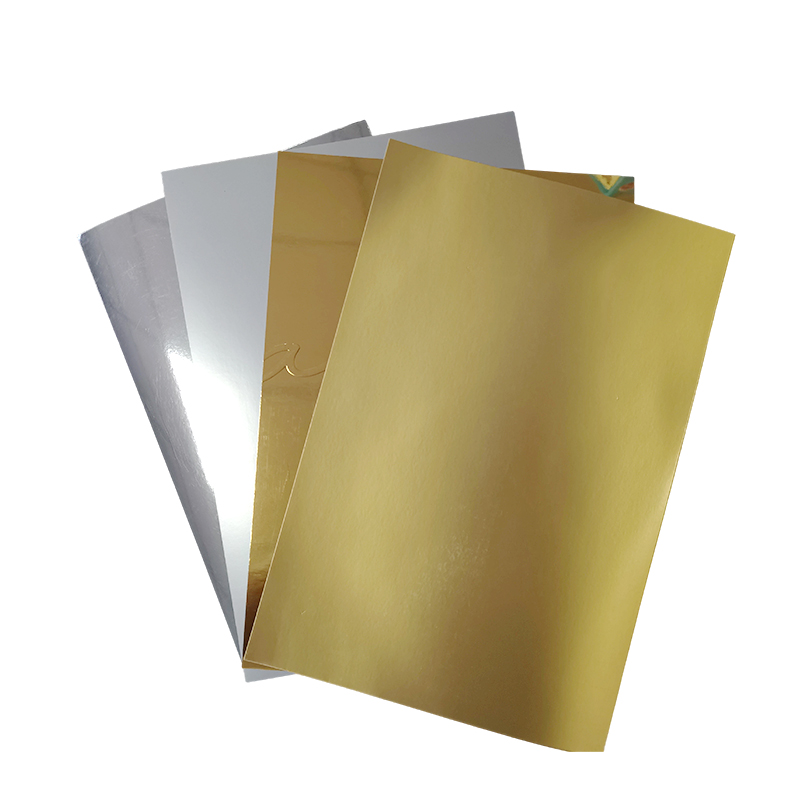 Gold Foil-Backed Cardboard for UV Printing WorkflowsThis composite material combines aluminum foil with cardstock, offering metallic luster, barrier properties, and compatibility with die-cutting and UV printing. It is relevant here due to its engineered adhesive performance under UV curing temperatures up to 150°C.View Product →
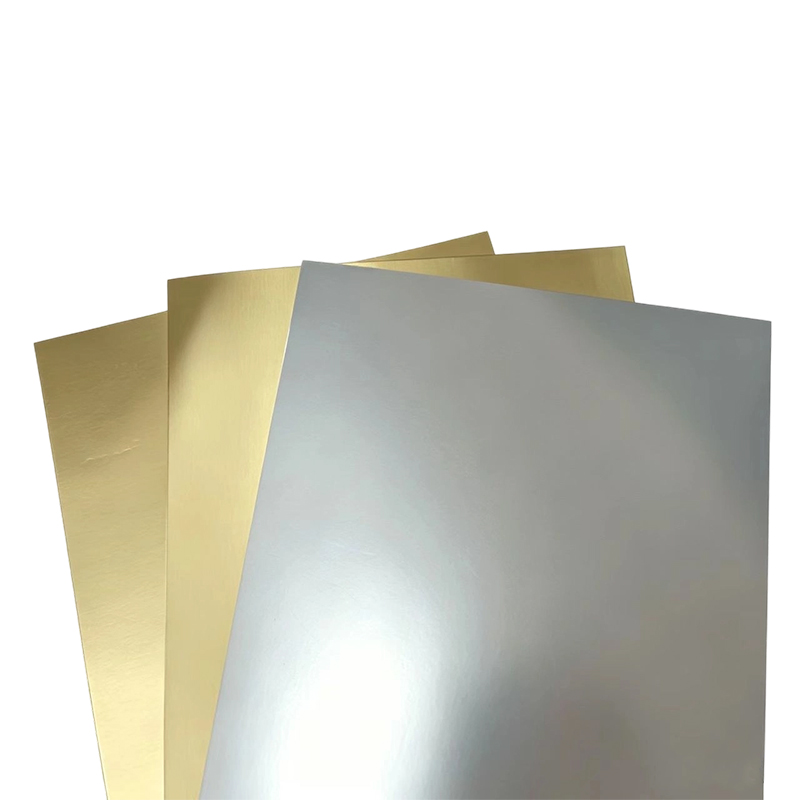 Silver Foil-Backed Cardboard for Premium PackagingFeaturing a bright silver-white metallic finish, this foil-laminated cardstock provides excellent barriers against moisture and oxygen while supporting offset printing and post-processing. It suits demanding UV curing environments where dimensional stability and bond integrity matter.View Product →
Yes, most aluminum foil cardboard can handle the typical temperatures generated by UV curing. Standard materials tolerate continuous exposure at 80°C–100°C and short peaks up to 120°C. Products with enhanced adhesives extend the peak tolerance to 150°C.
The maximum safe temperature is usually around 120°C for continuous processing. Brief excursions up to 150°C can be acceptable, but only for a few seconds to a couple of minutes. Exceeding this limit risks permanent damage.
Indirectly. The foil is very conductive, so it spreads heat quickly across the surface. This can reduce hot spots, but it also brings thermal energy to the adhesive layer sooner. The overall limit is set by the adhesive and paperboard, not the foil alone.
Place a sample on a flat surface inside an oven set to your target temperature, hold it for 10 minutes, and inspect for curl, delamination, or discoloration. For more accurate results, run a sample through your actual UV curing line at the intended lamp power and belt speed.
Understanding the temperature and heat resistance limits of aluminum foil cardboard for UV curing helps you select the right material, optimize machine settings, and reduce waste. Keep the board below 120°C whenever possible, verify the adhesive's thermal rating, and partner with a supplier that provides clear technical support.
For more information about our aluminum foil cardboard products and their performance in UV curing applications, visit our product page or contact our team.